
23 Dec 2025
Minoxidil Side Effects for Hair Loss Treatment: What’s Expected, What’s Not, and How to Fix It
Share


Hair loss remains one of the most prevalent dermatological concerns worldwide. About 67% of men experience noticeable thinning by age 35. With awareness and treatment options growing, the global minoxidil market is expanding at a 6.8% annual rate, reflecting its role as one of the most trusted solutions for hair regrowth worldwide.
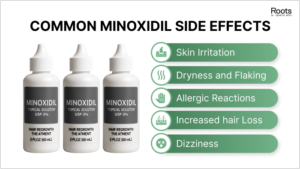
Starting minoxidil is often associated with shedding, mild itching, or tingling. While concerning, these effects are common and typically reflect increased follicular activity. Understanding which responses are expected helps clarify what occurs as hair enters renewed growth cycles.
At Roots by GA, we combine genetic testing and dermatologist expertise to personalize minoxidil use, so you can minimize discomfort and maximize growth.
Possible Side Effects of Topical Minoxidil (From Common to Rare)
Studies comparing different strengths show that higher concentrations may lead to slightly faster or denser regrowth, but they also increase the likelihood of irritation in some patients [2]. Not every episode of tingling, itching, or shedding indicates an underlying issue though. Differentiating expected responses from atypical ones helps maintain appropriate caution and consistent treatment, making sure you get the best results.

Why Side Effects Happen in the First Place
Minoxidil has helped millions regrow hair; however, concerns about potential side effects can deter others from initiating treatment. Interestingly, hair growth itself was discovered as a side effect when patients taking oral minoxidil for hypertension began noticing thicker hair growth. This 1970s accidental discovery forever changed FDA-approved hair restoration therapy.
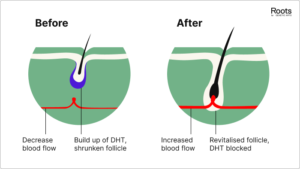
Minoxidil increases blood flow and nutrient delivery to hair follicles, reactivating dormant ones. That sudden activity can temporarily disturb the scalp’s balance, hence the tingling, flaking, or mild shedding. However, most “side effects” stem from the formulation’s base ingredients (like propylene glycol and alcohol), not from minoxidil itself.
The good news? Most minoxidil side effects are mild, temporary, and manageable with pharmacogenetic testing for a custom combination approach.
Initial Hair Shedding
Androgenetic alopecia affects nearly 80% of men and 50% of women by age 70. It may seem counterintuitive to lose hair while treating hair loss, but that temporary shedding phase is proof that minoxidil is jumpstarting the hair’s renewal cycle.
Here’s why: hair naturally grows in repeating cycles, anagen (growth), catagen (transition), and telogen (resting/shedding). At the beginning of minoxidil therapy, the medication stimulates dormant follicles to transition back into the anagen (growth) phase. As new hairs begin to form, existing hairs are naturally displaced, resulting in a temporary shedding phase that typically precedes visible regrowth [1].
💡 Pro Tip: Don’t panic or stop treatment during the initial hair-shedding stage; it’s a normal reset that clears the way for healthier, thicker strands to grow in.
Itchy Scalp or Allergy
Several users may also experience scalp discomfort when starting minoxidil. The adverse reactions are usually mild and temporary, but it’s important to recognize signs of irritation versus an allergic response.
Mild Tingling or Dryness
A slight tingle or bit of dryness is usually the scalp adjusting to increased circulation and new follicle activity. This minor discomfort often fades on its own, but you can help calm your scalp by:
- Applying a lightweight, non-comedogenic moisturizer or hyaluronic acid scalp mist to restore hydration.
- Spacing out applications for a few days to let your skin settle.
If the sensation lingers, switch to a gentler or propylene glycol–free formula designed for sensitive scalps.
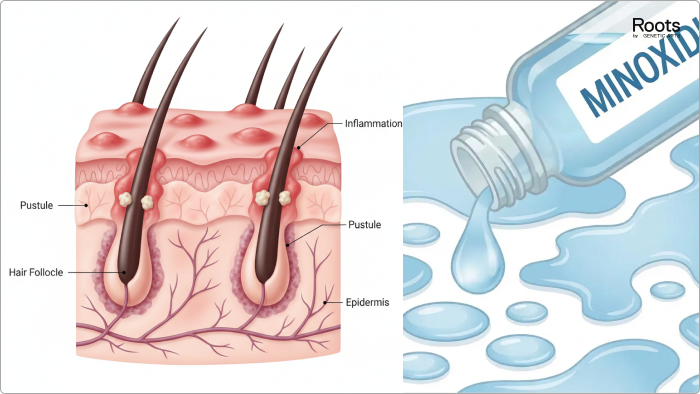
Itching, Redness, or Flaking
In case of experiencing itching, redness, or flaking, the likely culprit isn’t the minoxidil itself; it’s propylene glycol (PG), a common carrier that helps the formula absorb into the scalp. While effective, PG can irritate sensitive skin types [4].
What to do:
- Switch to minoxidil foam (which is PG-free).
- Use a custom-compounded serum with calming ingredients like niacinamide or panthenol.
- Avoid alcohol-heavy styling products since they may amplify dryness.
Allergy or Sensitivity to Ingredients
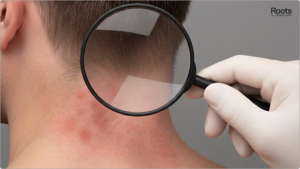
Severe allergic reactions to minoxidil, while rare, also occur due to other ingredients in the formula, not minoxidil itself. Common triggers include propylene glycol, ethanol, or certain fragrances and preservatives added for stability.
Watch for warning signs such as:
- Intense redness, hives, or burning sensations.
- Swelling around the eyes, lips, or face.
- Difficulty breathing (requires immediate medical attention).
If any of these symptoms appear, stop using the product right away and consult a dermatologist before restarting treatment. They can help identify the irritant and recommend a hypoallergenic or PG-free advanced topical formulation that’s safer for your skin.
💡 Pro Tip: Always patch-test new scalp treatments first. It’s a simple step that can save you weeks of discomfort.
Unwanted Facial Hair Growth
Noticing fine hairs along the temples, forehead, or cheeks can be surprising, but it’s often a temporary side effect of product transfer. This usually happens when minoxidil drips beyond the scalp line or when residue is transferred to the face before it fully dries. These stray hairs aren’t permanent; once exposure stops, they naturally shed on their own [5].
How to prevent it:
- Apply with precision using a dropper or foam applicator to keep the solution on your scalp.
- Allow the product to fully dry before lying down or putting on hats.
- Wash your hands thoroughly after each use to avoid accidental transfer.
Rare or Concerning Reactions: When to Stop and See a Doctor
While topical minoxidil has an excellent safety record, it’s wise to know the red flags. Seek medical advice if you experience:
- Chest pain or rapid heartbeat.
- Shortness of breath or swelling in hands/feet.
- Persistent dizziness or fainting.
These symptoms indicate systemic absorption (drug entering the blood circulation), though uncommon, but possible, especially with overuse, application on irritated skin, or use alongside oral minoxidil. Most systemic side effects (like fluid retention or low blood pressure) are associated with oral minoxidil, not the topical form [3].
Caution: If these symptoms occur, discontinue use and contact your healthcare provider for guidance.
How Roots by GA Helps Minimize Side Effects
At Roots by GA, we understand that no two scalps are alike. That’s why we use DNA-driven testing and dermatologist-formulated serums to customize treatment and reduce side effects from day one.
- Genetic Response and Enzyme Activity: Your genetic makeup determines how well your scalp absorbs minoxidil. The SULT1A1 enzyme, for example, is key to converting minoxidil into its active form. People with lower enzyme activity often experience slower results or irritation.
- Concentrations and Carrier Ingredients: Based on your biology and scalp sensitivity, Roots creates a tailored blend that adjusts the minoxidil concentration for optimal effect and selects a carrier base (foam, serum, or PG-free solution) for comfort.
- Science-Backed Additives: Incorporates proven, science-backed ingredients like cetirizine (reduces inflammation and itching) and melatonin (supports scalp health and reduces shedding) to enhance tolerance. This personalized approach delivers the same regrowth power, with fewer irritants and more balance.
- DNA-Guided Root-Cause Insights: When your formula aligns with your genetics, you’re not just treating hair loss; you’re treating the root cause. Roots by GA’s cheek-swab DNA test report helps analyze over 50 genetic markers linked to hair growth and treatment response.
- Comprehensive Regrowth Plan: Beyond the DNA test, Roots experts help you build a comprehensive regrowth plan that combines topical treatments, nutrition, and scalp care.
💡Pro Tip: Consistency matters more than intensity. It’s better to apply the right strength daily than overuse a stronger formula irregularly.
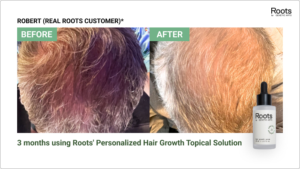
The Bottom Line: Personalized Care Is the Key to Comfort
Minoxidil remains one of the most studied and effective hair regrowth treatments worldwide. Most side effects are temporary signs of progress, and nearly all can be prevented or minimized with the right formulation, patience, and support.
Instead of discontinuing treatment at the first sign of irritation, use it as a signal that the formulation may need adjustment. Genetic and scalp-specific data can help identify which concentrations or carriers are better tolerated.

Frequently Asked Questions
- Can I prevent side effects before starting minoxidil?
Yes, you can prevent side effects before starting minoxidil by patch-testing first, starting with a small dose, and using PG-free formulas if you have sensitive skin. - What happens if I skip applications while experiencing side effects?
It’s okay to pause briefly to let irritation settle, but stopping for long can delay regrowth. Consult your provider for adjustments. - Does using other hair products increase the risk of side effects?
Heavy oils or alcohol-based styling products can reduce absorption or cause buildup. Keep your scalp clean and dry before applying. - Can genetics determine whether I’ll have side effects from minoxidil?
Absolutely. Variants in genes like SULT1A1 affect how efficiently your scalp metabolizes minoxidil; that’s why Roots by GA personalizes your treatment for comfort and efficacy.
Bibliography
- Wang J, Wang L, Gao S, Li X. Recent Advances in the Role of Fibroblast Growth Factors in Hair Follicle Growth. Biomolecules. 2025;15(8):1198. doi:https://doi.org/10.3390/biom15081198
- Goldust M, Singh S, Patil A, et al. Does Topical Minoxidil at Concentrations Higher than 5% Provide Additional Clinical Benefit? Clinical and Experimental Dermatology. 2022;47(11):1951-1955. doi:https://doi.org/10.1111/ced.15338
- Penha MA, Miot HA, Kasprzak M, Ramos PM. Oral Minoxidil Vs Topical Minoxidil for Male Androgenetic Alopecia. JAMA Dermatology. 2024;160(6). doi:https://doi.org/10.1001/jamadermatol.2024.0284
- Trüeb RM. Efficacy, Tolerability, and Superiority of Propylene Glycol-Free, North American Witch-Hazel (Hamamelis virginiana)-Based Solution of 5% Minoxidil Sulfate for the Treatment of Female Androgenetic Alopecia. International Journal of Trichology. 2023;15(3):108-112. doi:https://doi.org/10.4103/ijt.ijt_55_22
- Dawber R, Rundegren J. Hypertrichosis in Females Applying Minoxidil Topical Solution and in Normal Controls. Journal of the European Academy of Dermatology and Venereology. 2003;17(3):271-275. doi:https://doi.org/10.1046/j.1468-3083.2003.00621.x
Roots by Genetic Arts
23 Dec 2025
Related Posts
-

Bryan-Johnson-Tested-Everything-for-Longevity
Read more -
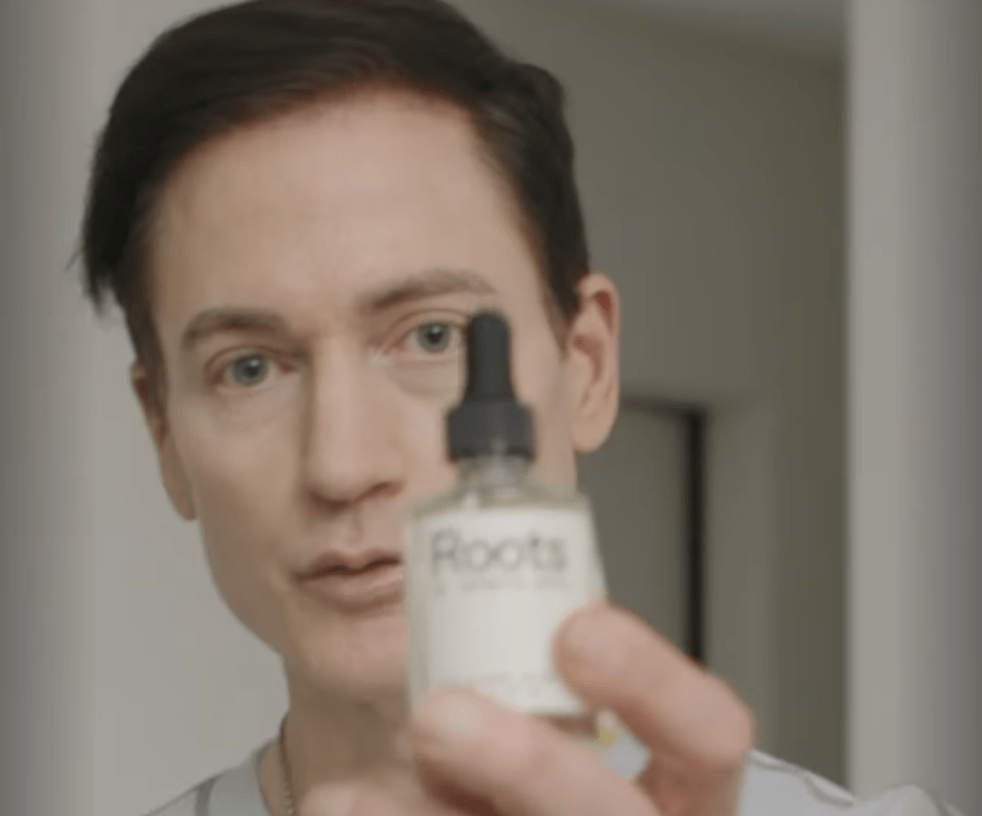
Bryan Johnson’s $2M Longevity Routine Includes Roots by GA for Hair Growth
Bryan Johnson is renowned for his dedication to longevity and wellness, spending a reported $2 million annually to explore and implement groundbreaking health practices. At Roots by Genetic Arts, we’re thrilled that Bryan has chosen our genetic approach to hair loss as a part of his regimen to support hair growth, regrowth, and scalp […]
Read more -
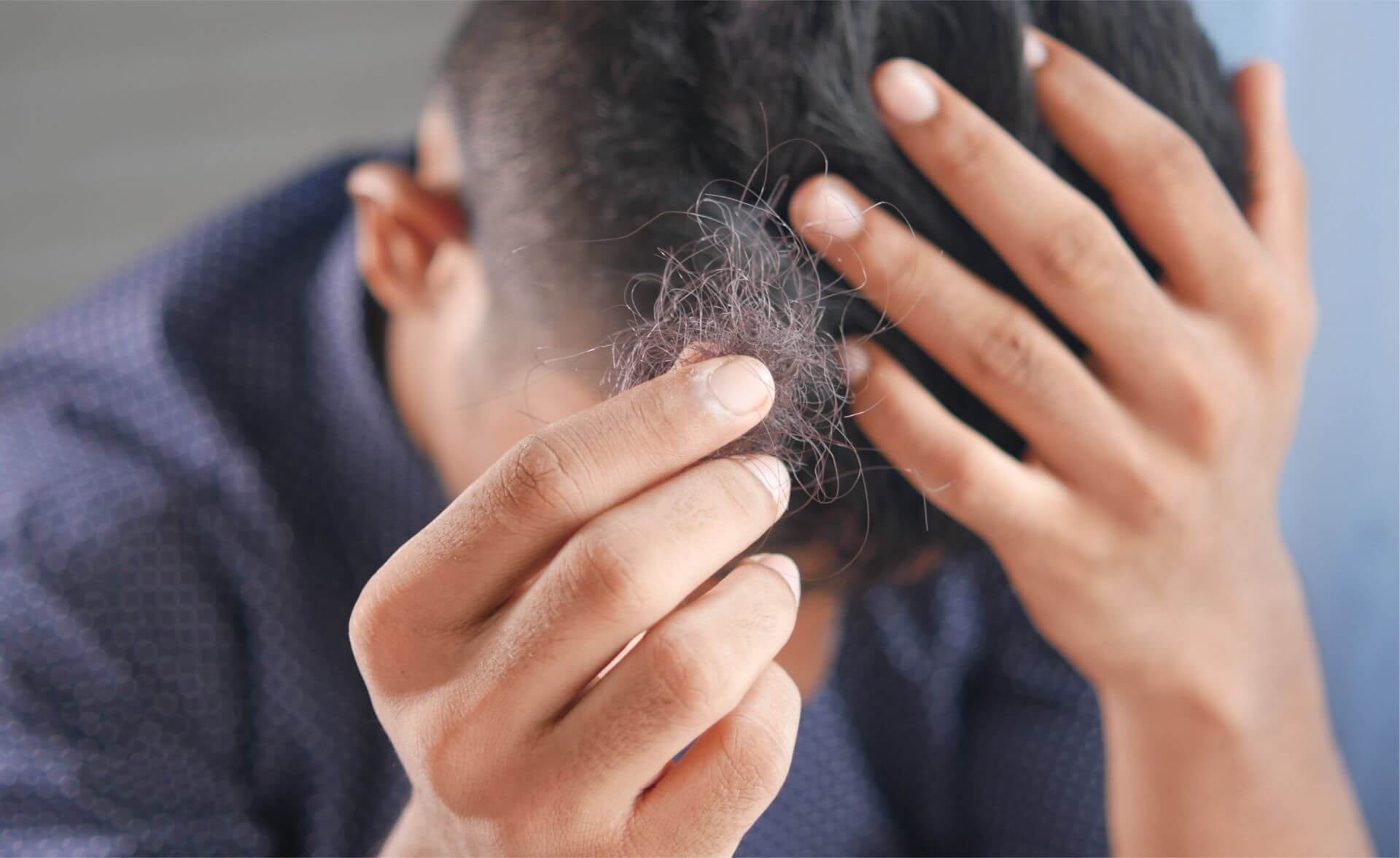
Solutions to Hair Loss and How to Grow Healthy Hair
There are solutions to help grow healthy hair. As men age, their hormones can change or become imbalanced and this can…
Read more -
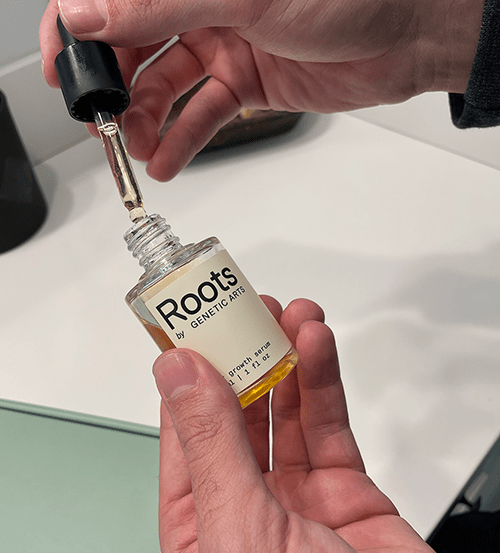
The 5 Steps in Our Hair Loss Treatment Process.
This article provides an overview of what to expect during our hair loss treatment process. How long does the entire process take? Once you submit your questionnaire and send in your test sample, you should receive your recommended topical within three weeks. The 5 steps to a custom hair loss treatment 1. Questionnaire The test […]
Read more
Thanks for your order!
Login into your profile to set up your account.