
19 Dec 2025
Receding Hairline: Causes, Signs & How to Stop It (With a Custom Solution)
Share


Hair loss often begins quietly — a few extra strands in the shower, a widening part, or a subtle change along the hairline. Over time, these small shifts can reveal a deeper underlying condition.
When hair follicles shrink, weaken, or stay in a prolonged resting phase, growth slows, and a receding hairline may appear. While genetics and hormones are leading causes, factors such as stress, nutrition, and even daily styling habits can also play a role. Understanding what’s driving that change is the first step toward restoring balance and confidence.
At Roots by Genetic Arts (often called Roots by GA), we understand that no two cases of hair loss are identical. That’s why our approach isn’t one-size-fits-all; it’s built around genetics, biology, and dermatologist-backed personalization.
A receding hairline can be slowed, and in many cases, regrowth is achievable, especially when treatment is guided by a deep understanding of one’s unique biological markers.
Prevention
Preventing a receding hairline starts with identifying what’s within control and what isn’t. While certain causes (like genetic predisposition) can’t be changed, many environmental, nutritional, and behavioral factors can be optimized to maintain healthy follicles for longer.
What You Can’t Change: Genetics and Androgen Sensitivity
Genetics largely determine how sensitive an individual’s follicles are to dihydrotestosterone (DHT). This testosterone byproduct shortens the hair cycle and gradually shrinks follicles. The process often begins subtly, showing as temple thinning or an M-shaped hairline.
This gradual shrinkage is called follicular miniaturization and is the hallmark of androgenetic alopecia (pattern hair loss).
At Roots by GA, we don’t treat genetics as a limitation but as a roadmap. Through genetic testing, we identify whether DHT sensitivity, inflammation pathways, or vitamin metabolism issues are contributing to follicle weakening, allowing us to tailor solutions that work with, not against, a person’s biological tendencies.

Lifestyle and Nutrition
Hair follicles are among the fastest-dividing cells in the body, which means they demand consistent nutrient support. Diets low in iron, vitamin D3, zinc, or biotin can exacerbate hairline recession. Likewise, chronic stress and sleep deprivation elevate cortisol levels, disrupting the hair cycle [1].
Supporting follicle health begins with balance:
- Prioritize protein-rich foods for keratin production.
- Ensure adequate iron and vitamin D3 intake.
- Manage stress through mindfulness or physical activity.
Nutritional optimization supports overall follicle health by improving cellular energy, reducing inflammation, and supplying the nutrients needed for healthy hair cycling. This stronger internal environment helps follicles respond more effectively to treatments such as minoxidil, low-level laser therapy, or personalized topical formulations. Together, the synergistic approach promotes stronger, more sustainable regrowth [4].
Hair Care Habits
Simple daily habits influence scalp integrity. Repeated traction from tight hairstyles, heat exposure, or chemical straightening can accelerate follicle damage. Gentle handling, scalp hydration, and minimal heat use can help prevent further stress to vulnerable hairlines.
We often advise clients to adopt low-tension styles and switch to sulfate-free cleansers, ensuring the scalp microbiome remains balanced (a foundation for long-term follicle stability).
Early Monitoring
Hairline changes happen gradually, so regular self-checks are crucial. Taking baseline photos every few months helps detect subtle shifts before they become noticeable. Early detection means more effective intervention.
We, as dermatologists, often remind patients that the earlier the response, the greater the chance of reversing the recession process.
Types and Patterns of Hairline Recession
A receding hairline isn’t the same as general hair thinning; it typically begins at the front or temples, creating an uneven or M-shaped pattern. In contrast, diffuse thinning affects the entire scalp or crown more uniformly.
The pattern and pace of recession can vary widely; some notice gradual temple thinning over the years, while others experience more sudden shifts after hormonal or lifestyle changes. Understanding these visual patterns can guide both diagnosis and targeted intervention.
Androgenetic Alopecia (Male/Female Pattern Hair Loss)
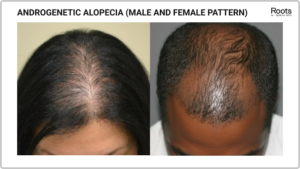
This is the most common cause of a receding hairline. In men, it usually forms an M-shaped pattern starting at the temples, while in women, it presents as frontal thinning with a widening part. Hormonal sensitivity, particularly to DHT, drives follicular miniaturization (shrinking of hair follicles over time when follicles become sensitive to DHT).
Traction Alopecia
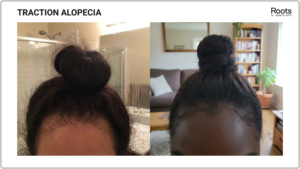
This form results from chronic mechanical pulling, from hairstyles such as tight ponytails, braids, or extensions. It’s often reversible when detected early and managed with reduced tension and topical therapies that restore follicle strength.
Frontal Fibrosing Alopecia (FFA)
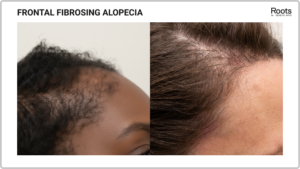
FFA is a scarring alopecia that typically affects women post-menopause. It causes progressive frontotemporal hairline recession and eyebrow thinning. Since it involves inflammation, early medical intervention and advanced topical treatments are essential to prevent irreversible follicle loss.
Telogen Effluvium and Temporary Causes
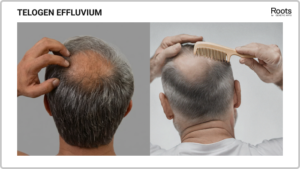
Stress, hormonal shifts (like postpartum changes), or illness can push a high percentage of follicles into a resting (telogen) phase, resulting in temporary thinning. Once the trigger is addressed, hair usually regrows within months.
Risk Factors
Several overlapping influences determine how quickly or severely a hairline recedes. Genetics may set the foundation, but hormones, lifestyle habits, and even scalp health determine how quickly change becomes visible. Recognizing these factors early helps guide prevention and treatment strategies that protect follicle strength for the long term.
Genetics and Family History
Your hair’s story often starts in your genetics. Your genes influence how each strand grows and renews. When pattern hair loss runs in the family, your follicles may be more responsive to DHT – the hormone that causes follicles to shrink, producing thinner and weaker hair. Knowing this helps you take early, personalized steps to protect and strengthen your strands.
At Roots by GA, we map these genetic polymorphisms to understand predispositions, helping guide ingredient selection and concentrations in our customized formulas. Understanding genetic patterns enables more precise, targeted treatments that address hair loss at its biological roots.
Hormonal and Endocrine Factors
Hormones are central to hairline regulation. Elevated DHT, thyroid imbalances, or menopausal estrogen shifts can alter follicle behavior. Studies show that balancing these pathways early can delay the onset of visible recession.
Age and Follicle Aging
With age, hair follicles naturally shrink and enter longer rest phases. Blood flow and nutrient supply to the scalp decrease. Using vasodilators like minoxidil or peptide-based topicals can help maintain follicle vitality.
Health and Medical Conditions
Autoimmune diseases (such as alopecia areata), thyroid disorders, or systemic inflammation can first manifest along the frontal scalp. That’s why our dermatology partners often recommend comprehensive bloodwork when diagnosing persistent hairline thinning.
Lifestyle and Mechanical Stressors
Smoking, poor diet, exposure to pollution, and UV radiation contribute to oxidative stress, which weakens follicular stem cells. Repeated scalp trauma, whether from harsh treatments or styling, can worsen the issue.
Signs and Diagnosis of a Receding Hairline
A receding hairline can be gradual and easy to overlook at first. Recognizing early indicators is key to timely and effective intervention.
Visual Cues
Common signs include:
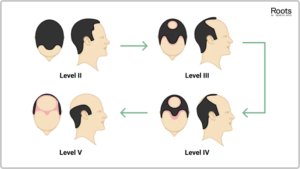
- M-shaped or uneven front hairline
- Thinning at the temples
- Widening forehead or visible scalp under light
Early signs may appear asymmetrically before progressing evenly.
Increased Shedding in the Frontal Region
Finding more hair strands falling out near the temples or on the front hairline can suggest localized shedding. If persistent, it may indicate early androgenetic alopecia rather than seasonal shedding.
Miniaturization and Finer Hair Shafts
Follicles begin producing thinner, lighter strands that break easily. Under trichoscopy (a scalp magnification tool), miniaturized hairs appear alongside thicker ones, a hallmark of early pattern hair loss.
When to Suspect Serious Issues
If the scalp shows inflammation, redness, or itching, or if hairline loss is rapid and patchy, consult a dermatologist. These could signal autoimmune or scarring conditions requiring medical treatment.
💡 Pro Tip: Document subtle hairline shifts with baseline photos every few months. Detecting changes early allows targeted therapy to preserve follicles before miniaturization begins.
How to Stop or Reverse a Receding Hairline
Stopping a receding hairline requires addressing both internal and external causes to strengthen hair growth and improve follicle and scalp health.
Diagnostic Steps
Diagnosis begins with observation and, ideally, genetic testing.
- Pull test: This test checks for active hair shedding, indicating the current state of hair loss.
- Blood tests: Lab reports are used to evaluate the levels of thyroid hormones, iron, Vitamin D, and other key hormones that influence hair health.
- Scalp examination or biopsy: This step is performed to identify specific patterns of hair loss or detect underlying inflammatory changes.
- Genetic testing: Genetic testing may be the easier first step in your hair regrowth journey. Our DNA test identifies biological predispositions and metabolism markers that guide ingredient selection.
By understanding whether DHT sensitivity, inflammation, or nutrient metabolism is the dominant factor, we tailor formulations that deliver targeted efficacy.
Standard Topical and Oral Therapies
- Minoxidil remains the first-line topical treatment for hair growth by increasing blood flow and extending the anagen (growth) phase [4]
- Topical finasteride or dutasteride suppresses DHT locally with fewer systemic effects than oral medications [5]
- Ketoconazole shampoos help control inflammation and scalp microflora imbalance [2]
A combination of these clinically proven ingredients often performs better than using them individually, especially the pairing of Minoxidil and Finasteride. Studies show this duo is more effective because each targets a different pathway: Finasteride reduces DHT, the hormone that shrinks follicles, while Minoxidil enhances blood flow and stimulates growth. When used together, they create a stronger, complementary response that helps restore density and slow recession [3].
We often incorporate these evidence-based ingredients into our personalized formulas, adjusting concentrations based on each person’s genetic response profile
Advanced and Adjunct Therapies
For those seeking additional support, therapies such as platelet-rich plasma (PRP), microneedling, and low-level laser therapy (LLLT) show promising synergy with topical treatments. All these therapies stimulate growth factors and improve follicle oxygenation.
We often recommend these as adjuncts, not stand-alone cures, since without addressing the underlying biology, results tend to plateau.
Why Many Treatments Fail: The “One-Size-Fits-All” Limitations
Most over-the-counter or standardized treatments fail because they ignore biological diversity. Two individuals may use the same product; one sees results, the other doesn’t, because their DHT metabolism, receptor activity, or scalp environment differs.
At Roots by GA, we’ve learned that personalized therapy outperforms generic solutions. Our formulations are compounded only after analyzing each individual’s DNA report, questionnaire, and dermatologist review.
This prevents common pitfalls like:
- Overusing actives that don’t match personal tolerance.
- Ignoring underlying inflammation.
- Failing to optimize ingredient synergy.

Receding Hairline Regrowth with Roots by GA
We take a data-driven approach to hairline restoration, combining DNA insights, dermatology expertise, and advanced compounding to create treatments that align with each person’s biology.
- How it works: Our process integrates a personalized questionnaire, DNA analysis, and dermatologist review to identify the biological drivers of hairline recession, including DHT sensitivity, inflammation, and nutrient metabolism.
- Why it works better: Customized topicals outperform generic options by matching active ingredients to genetic biomarkers, minimizing side effects, and reducing trial-and-error.
- Roots’ 5-step process: Our 5-step process begins with a personalized questionnaire and a simple at-home genetic test. Once your sample is analyzed, our dermatologists review the results and prescribe a customized topical based on your unique biology. Your formulation is then compounded and shipped within three weeks, with ongoing subscriptions ensuring consistent treatment and progress tracking.
- Key ingredients: Formulations may include minoxidil, dutasteride, latanoprost, cetirizine, caffeine, or peptides, selected based on genetic responsiveness.
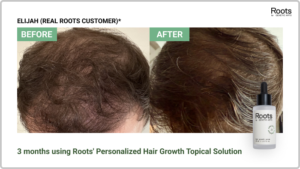
- What to expect: Noticeable improvement typically appears within 3 to 6 months. Real user results, featured in our success stories, highlight consistent regrowth with professional oversight (results vary).
Maintenance and Long-Term Strategy
Hair regrowth requires consistency. Once progress is achieved, ongoing maintenance ensures results persist. We often retest genetics or adjust formulations annually to match biological changes over time. Consistency, gentle care, and medical oversight form the foundation of lasting results.
The Bottom Line
A receding hairline is not an inevitable sign of permanent hair loss; it’s an opportunity to intervene early with precision. By decoding the genetic, hormonal, and environmental factors behind follicle decline, targeted treatment becomes possible.
At Roots by GA, we believe treating a receding hairline isn’t about fighting genetics; it’s about understanding it. By combining scientific precision, dermatologist insight, and personalized formulation, we help individuals move beyond trial-and-error to truly customized care tailored to their unique biology.

Frequently Asked Questions
- Can a receding hairline grow back?
Yes, especially when treated early and with a targeted approach. Miniaturized follicles can be reactivated using customized topicals that match biological response patterns. - How do I stop my hairline from receding?
Identify underlying factors (DHT, stress, nutrient deficiency) and treat accordingly. A personalized plan from Roots by GA ensures your regimen targets your unique biology. - How long does it take to see results?
Most users begin noticing reduced shedding and early regrowth within 3–6 months of consistent use. Full restoration may take up to a year, depending on the extent of recession. - Is a genetic hair test worth it?
Absolutely. It removes the guesswork. Understanding your DNA reveals which actives your body will respond to, reducing trial-and-error frustration.
5. Does Roots by GA work for women?
Yes. Our formulations are gender-inclusive and adjusted for hormonal variations and scalp sensitivity differences between men and women.
Bibliography
- Lin CS, Chan LY, Wang JH, Chang CH. Diagnosis and Treatment of Female alopecia: Focusing on the Iron deficiency-related Alopecia. Tzu Chi Medical Journal. 2023;35(4):322-328. doi:https://doi.org/10.4103/tcmj.tcmj_95_23
- Gupta AK, Doncker PD, Talukder M. Role of Topical Ketoconazole in Therapeutic Hair Care beyond Seborrhoeic Dermatitis and Dandruff. JEADV Clinical Practice. Published online March 26, 2025. doi:https://doi.org/10.1002/jvc2.70026
- Rossi A, Caro G. Efficacy of the Association of Topical Minoxidil and Topical Finasteride Compared to Their Use in Monotherapy in Men with Androgenetic alopecia: A Prospective, Randomized, Controlled, Assessor-blinded, 3‐arm, Pilot Trial. Journal of Cosmetic Dermatology. 2023;23(2):502-509. doi:https://doi.org/10.1111/jocd.15953
- Lee JW, Kang J, Choi JY, Hong KT, Kang HJ, Kwon O. Topical Minoxidil and Dietary Supplement for the Treatment of chemotherapy-induced Alopecia in childhood: a Retrospective Cohort Study. Scientific Reports. 2024;14(1). doi:https://doi.org/10.1038/s41598-024-53054-8
- Piraccini BM, Blume-Peytavi U, Scarci F, et al. Efficacy and safety of topical finasteride spray solution for male androgenetic alopecia: a phase III, randomized, controlled clinical trial. J Eur Acad Dermatol Venereol. 2022;36(2):286-294. doi:https://pmc.ncbi.nlm.nih.gov/articles/PMC9297965/
Roots by Genetic Arts
19 Dec 2025
Related Posts
-

Minoxidil Side Effects for Hair Loss Treatment: What’s Expected, What’s Not, and How to Fix It
Hair loss remains one of the most prevalent dermatological concerns worldwide. About 67% of men experience noticeable thinning by age 35. With awareness and treatment options growing, the global minoxidil market is expanding at a 6.8% annual rate, reflecting its role as one of the most trusted solutions for hair regrowth worldwide. Starting minoxidil is […]
Read more -

What FDA approved Hair Growth Solutions are Available?
There are a variety of treatments available to help restore hair growth. The U.S. Food and Drug Administration (FDA) has approved several treatments…
Read more -

Why are Vitamins and Minerals Essential to Hair Growth?
Vitamins and minerals are essential for healthy hair growth. They provide the necessary nutrients to keep your hair strong, shiny, and full of life…
Read more -

Postpartum Hair Loss and Everything New Moms Should Know About It
Noticing more hair shedding after childbirth can be startling, especially when it feels like one more unexpected change in an already transformative time. Yet, this phase, known as postpartum telogen effluvium, is a common and temporary response to hormonal shifts after pregnancy. As estrogen levels decline and the body recalibrates, more hairs enter the shedding […]
Read more
Thanks for your order!
Login into your profile to set up your account.