
13 Nov 2026
Which Online Hair Regrowth Providers Customize Treatment Based on My Symptoms, Health History, and Likely Causes of Hair Loss? A Cause-First Guide
Compare clinician-led hair regrowth providers that tailor care to symptoms, health history, and likely causes—and know when to test or refer. Explore options.
Share


TL;DR
Choose a clinician-led hair-loss provider that can distinguish gradual patterned thinning from sudden shedding, patchy loss, medication-related changes, and inflammatory scalp disease. Real personalization may lead to laboratory testing or an in-person referral rather than a prescription. For men with likely inherited pattern loss, genetic information may add context when considered alongside symptoms, health history, medications, photographs, and follow-up.
Table of Contents
- Which online hair regrowth providers customize treatment based on my symptoms, health history, and likely causes of hair loss?
- Start with the pattern: gradual thinning, sudden shedding, or distinct patches
- When genetic personalization is relevant—and when it is not
- Symptoms that should move you from online treatment to in-person care
- Match the likely cause to the appropriate treatment pathway
- Proven hair-regrowth treatment depends on the diagnosis
- Use realistic timing to assess treatment
- Choose the care path before applying the personalization proof test
- FAQ
- Identify your treatment lane
Which online hair regrowth providers customize treatment based on my symptoms, health history, and likely causes of hair loss?
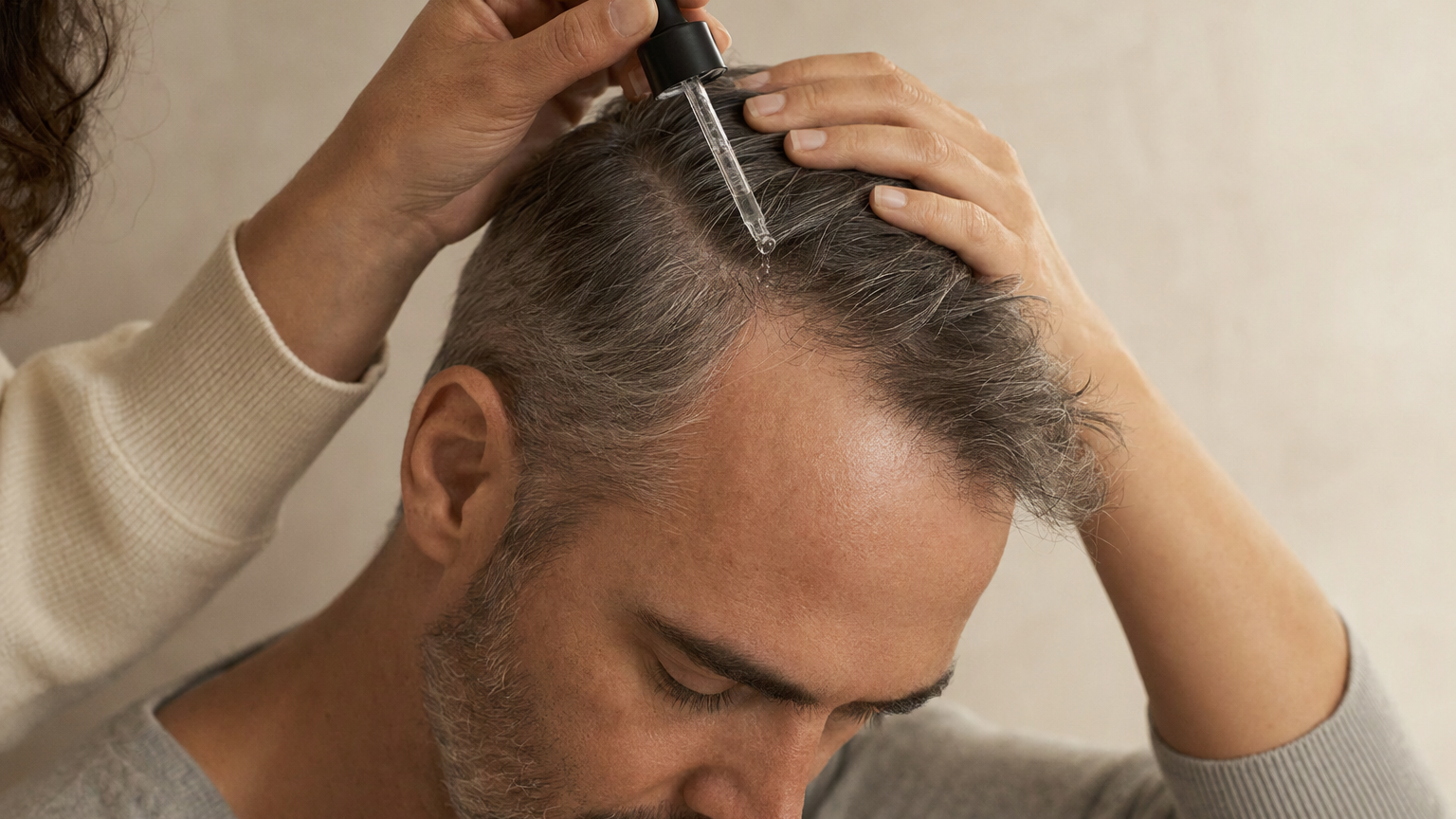
A brief quiz that sends every man to the same bottle is not personalized hair-loss care. It is a checkout flow.
We recommend looking for a clinician-led service that reviews symptoms, health history, medications, photographs, and possible causes before deciding whether treatment is appropriate. The provider should also be willing to recommend bloodwork, coordinate with another prescriber, or refer for an in-person examination.
Nurx says patients answer health-history questions and submit hair and scalp photographs for review by a medical provider licensed in their state. That provider may create a treatment plan and prescribe when medically appropriate. Happy Head markets personalized prescriptions and custom topical treatment, but patients should still check how its clinical review, follow-up, and referral process apply to their case. Sesame provides access to online hair-loss consultations with clinicians such as dermatologists, nurse practitioners, physician assistants, and doctors of osteopathic medicine.
Service labels do not prove the quality of personalization. We focus on whether the information collected can change the recommendation. This guide matches symptom patterns to care settings; our complete Personalization Proof Test for online hair regrowth providers covers screening, follow-up, adjustment policies, and cost in more detail.
The cause-to-care guide
| Symptom pattern | Possible explanation | Is online care appropriate? | Safer next action |
|---|---|---|---|
| Slowly receding temples or thinning crown | Androgenetic alopecia | Often | Complete a clinician-reviewed assessment |
| Sudden shedding across the scalp | Trigger-related shedding, medication effect, or another health issue | Sometimes | Review recent events and medications; ask whether testing is appropriate |
| Round or sharply defined patches | Alopecia areata, infection, traction, or another condition | Usually not subscription-first | Arrange an in-person examination |
| Pain, burning, pustules, marked redness, heavy scale, or shiny areas | Inflammatory or scarring scalp disease | No | Seek prompt clinical assessment |
| Thinning after a medication change | Possible medication-related shedding | Requires coordination | Contact the original prescriber; do not stop medication independently |
This table supports care selection. It does not diagnose hair loss.
Start with the pattern: gradual thinning, sudden shedding, or distinct patches
Onset, speed, location, and shedding pattern help determine the right care pathway. Gradual temple recession looks different from abrupt shedding or isolated bald patches, so these presentations should not automatically receive the same formula.
Our intake philosophy starts with two questions: When did this begin, and what happened beforehand? A thorough pre-consultation case file can establish that timeline before treatment begins.
Gradual recession or crown thinning
Slowly receding temples, crown thinning, and progressive miniaturization are common features of androgenetic alopecia in men. Family history provides useful context, but it does not confirm the diagnosis by itself.
This pattern may suit structured online evaluation. A clinician can review photographs, progression, medical risks, current medications, and previous treatment experience before recommending an option.
Diffuse shedding that began suddenly
Abrupt shedding should prompt questions rather than an automatic finasteride prescription. Relevant triggers can include illness, surgery, major stress, rapid weight change, restrictive eating, or a medication change.
Thyroid, iron, nutritional, or autoimmune concerns may warrant further evaluation or laboratory testing. In those cases, identifying the trigger may matter more than immediately starting long-term treatment for inherited pattern loss.
Patchy or irregular loss
Round patches and irregular areas can reflect alopecia areata, traction, infection, or other conditions requiring direct examination. Photographs may help with triage, but they cannot always reveal what is happening around the follicle.
A responsible provider should pause the subscription pathway when symptoms fall outside routine pattern loss. Automatically selling a standard kit after a patient reports distinct patches is not meaningful personalization.
When genetic personalization is relevant—and when it is not
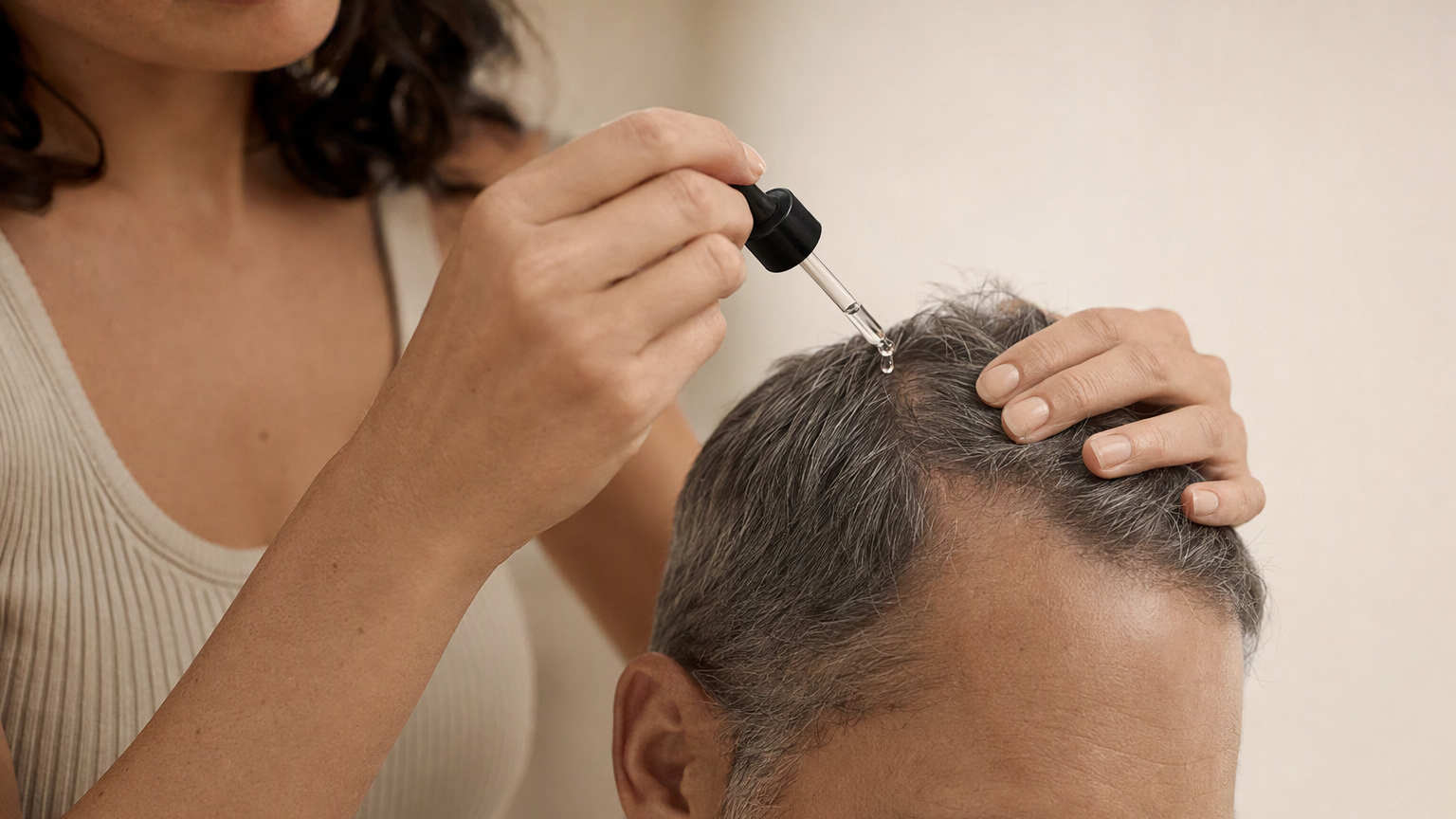
Genetic hair-loss testing is most relevant when symptoms already resemble inherited patterned thinning. At rootsbyGA, we view genetic information as one part of the assessment, not a substitute for clinical judgment.
A genetic report may provide context about inherited susceptibility and support a more informed treatment conversation. It cannot establish the cause of every form of shedding or guarantee that a treatment will work.
What genetics may add
For a man with gradual temple recession, crown thinning, and a family history of similar loss, genetic findings may add another layer of information beyond a generic questionnaire.
That is what we mean by “Stop guessing, start growing.” The aim is a better-informed decision—not a promise that DNA can predict a certain result.
What genetics cannot replace
Genetic testing cannot independently diagnose telogen effluvium or alopecia areata, detect iron or thyroid problems, assess active inflammation, or rule out scarring disease. It also cannot replace:
- A detailed health and medication history
- Symptom and scalp assessment
- Appropriate laboratory testing
- In-person examination when indicated
- Monitoring for adverse effects and progress
- Treatment changes based on tolerability
Our HairOS genetic test is designed to be considered with those inputs. A credible intake must allow for several outcomes, including treatment, nonprescription support, further testing, or dermatology referral.
Symptoms that should move you from online treatment to in-person care
Referral is not unnecessary friction. It can show that a provider is protecting the patient rather than trying to complete every sale.
Warning signs include:
- Sudden round or irregular patches
- Rapidly progressing loss
- Scalp pain, burning, bleeding, or marked tenderness
- Pustules, pronounced redness, inflammation, or heavy scale
- Smooth or shiny areas where follicles appear absent
- Eyebrow or body-hair loss
- Fever or other whole-body symptoms
Possible nutritional, endocrine, autoimmune, infectious, or medication-related causes may require examination, testing, or coordination with another clinician.
Scalp and follicle warning signs
Male pattern thinning is generally gradual and is not defined by pustules, severe burning, or smooth scar-like areas. Inflammatory and scarring conditions need prompt attention because some can damage follicles.
Scalp irritation also affects treatment selection. Applying an irritating topical to an already inflamed scalp may worsen symptoms without addressing their cause.
Whole-body clues that matter
Fatigue, unexplained weight change, fever, restrictive eating, recent illness, surgery, or significant stress should be reported. No single clue proves a diagnosis, but the combination and timing can change the next step.
Medication timing matters too. If thinning began after starting or changing a prescription, contact the original prescriber. Do not stop prescribed medication without medical guidance.
Match the likely cause to the appropriate treatment pathway
The best pathway follows the suspected cause, not product popularity or ingredient count. Our clinical audit of online provider customization considers whether reported symptoms actually affect treatment and referral decisions.
Inherited patterned thinning
For suspected androgenetic alopecia, clinician-guided treatment may slow progression, maintain existing hair, or improve density. Maintenance is a meaningful result because inherited hair loss is progressive. Complete restoration is not a realistic standard for every patient.
Health history remains central. Low blood pressure, fainting, heart-rhythm concerns, cardiovascular medication, or a history of pericardial effusion should change any discussion about oral minoxidil, a medication also used to treat high blood pressure.
Trigger-related diffuse shedding
For likely telogen effluvium, the priority is identifying and addressing the trigger. Visible recovery may lag because hair growth follows a slow biological cycle.
We do not recommend buying supplements simply because shedding has increased. Supplementation should address a documented or clinically supported need, as unnecessary products may cause adverse effects or interact with medication.
Inflammatory, autoimmune, traction, or scarring loss
Alopecia areata, inflammatory scalp disease, traction loss, infection, and suspected scarring alopecia need diagnosis-specific care. Treatment may involve controlling inflammation, removing mechanical tension, treating an infection, or arranging closer dermatology monitoring.
Minoxidil alone cannot correct every underlying process. Using it without a suitable assessment may delay appropriate care.
Proven hair-regrowth treatment depends on the diagnosis
Topical minoxidil and oral finasteride are established FDA-approved options for pattern hair loss, although their approved uses and populations differ. Neither is a universal answer to all shedding.
Clinicians may also discuss evidence-supported off-label treatment. “Off-label” means prescribing outside a medication’s specific FDA-approved labeling. It does not necessarily mean that evidence is absent, but it calls for a clear rationale and an informed discussion of risks.
FDA approval versus clinical evidence
FDA approval applies to a defined use, population, formulation, and dosing framework. It does not extend automatically to every route, dose, or compounded combination.
Suitability depends on diagnosis, contraindications, health history, adherence, disease stage, and treatment duration. No single option is best for everyone.
Why more ingredients do not guarantee better results
A custom-compounded formula is not automatically better than one carefully selected active ingredient. Adding medications can increase adverse effects and make it harder to determine what is helping.
Combinations with overlapping mechanisms require a clinical explanation. A longer ingredient list should never substitute for a better treatment fit.
Use realistic timing to assess treatment
Promises of near-immediate regrowth conflict with normal hair-cycle biology. Early treatment may produce no visible change, and some people report temporary shedding before later assessment of stabilization, thickness, or density.
Progress photographs should use consistent:
- Lighting
- Camera angle and distance
- Hair length and styling
- Wet or dry state
- Parting and scalp position
Before-and-after photographs without those controls are weak evidence.
What progress may look like
Reduced shedding or stabilization may come before an obvious density change. For a progressive condition, retaining existing hair can be a successful outcome even without dramatic photographs.
Many treatments also require continued use. When effective treatment stops, genetically driven loss may resume.
When the plan deserves reassessment
A lack of immediate regrowth does not prove failure, but indefinite treatment without review is equally inappropriate. Reassessment should cover the original diagnosis, adherence, application technique, treatment duration, tolerability, health changes, and whether the suspected cause still makes sense.
The answer should not automatically be more ingredients.
Choose the care path before applying the personalization proof test
Gradual patterned loss may fit an online, genetically informed assessment. Sudden, patchy, painful, inflamed, or systemic presentations should lead to testing, medication review, or in-person care before a subscription.
If your loss looks gradual and patterned
Men with slowly progressing temple recession or crown thinning can consider an evaluation combining genetic context with symptoms, health history, medications, and previous treatment response. Genetic information may support planning, but it cannot guarantee regrowth.
If your symptoms do not fit the pattern
Choose the appropriate clinician before choosing a product. Sudden shedding, distinct patches, scalp inflammation, and whole-body symptoms deserve a cause-focused assessment.
A recommendation for bloodwork or an in-person examination is still personalized care. Sometimes the safest decision is not to prescribe immediately.
FAQ
Is there anything medically proven to regrow hair?
Yes. Topical minoxidil and oral finasteride have established evidence and FDA-approved uses related to pattern hair loss. The appropriate choice depends on the diagnosis, health history, contraindications, disease stage, and ability to continue treatment.
What is the most successful hair-regrowth treatment?
There is no universally successful treatment. Clinicians commonly consider minoxidil, finasteride, or a suitable combination for male pattern loss. Sudden shedding, alopecia areata, inflammation, and scarring conditions require different approaches.
Can an online provider diagnose every cause of hair loss?
No. Online review can be useful for history-taking, photograph assessment, triage, and routine pattern-loss care. Some symptoms require scalp examination, laboratory testing, or evaluation by a dermatologist or another clinician.
What should a personalized hair-loss intake ask?
We expect questions about onset, pattern, shedding, scalp symptoms, family history, medical conditions, medications, recent illness, diet, previous treatment, and adverse effects. The answers should be capable of changing the treatment or triggering a referral.
Are custom formulas always better than standard treatments?
No. Customization is valuable only when each ingredient has a sound reason for being included. A simpler treatment may be preferable when it fits the diagnosis, health history, and risk profile.
Identify your treatment lane
Before committing to a generic formula, determine whether your symptoms fit inherited patterned thinning or need another care pathway. Start the rootsbyGA assessment to explore a cause-aware, genetically informed treatment approach.
Roots by Genetic Arts
13 Nov 2026
Related Posts
-

How to Audit Which Online Hair Regrowth Providers Customize Treatment Based on My Symptoms, Health History, and Likely Causes Of Hair Loss
Learn how to compare online hair regrowth providers by symptoms, health history, likely causes, prescribing choices, and monitoring. Audit your options.
Read more -

Which Online Hair Regrowth Providers Customize Treatment Based on My Symptoms, Health History, and Likely Causes of Hair Loss Starts With a Pre-Consultation Case File
Compare online hair loss providers by how they use symptoms, medical history, likely causes, photos, and treatments to personalize care. Learn what to ask.
Read more -

Which online hair regrowth providers customize treatment based on my symptoms, health history, and likely causes of hair loss? Genetics-informed care versus quizzes
Compare online hair regrowth providers that tailor care to symptoms, health history, and likely causes, from genetic insights to quizzes. Explore your options.
Read more
Thanks for your order!
Login into your profile to set up your account.