
4 Nov 2026
Hair Loss Drugs: A Diagnosis-First Guide to Choosing What Fits
Learn how diagnosis guides hair loss drug choices, from slowing thinning to supporting regrowth, while weighing risks and results. Explore your options.
Share


TL;DR
Hair loss drugs may slow thinning, preserve vulnerable follicles, stimulate growth, or control inflammation, depending on the cause. No single medication treats every form of hair loss. We recommend confirming the diagnosis, reviewing risks and practical constraints, choosing a sustainable regimen, and tracking results consistently.
Table of Contents
- Hair Loss Drugs: What They Can—and Cannot—Treat
- Start With the Cause: Not Every Type of Hair Loss Needs the Same Drug
- Finasteride vs. Minoxidil: Different Mechanisms, Benefits, and Limits
- Oral vs. Topical Hair Loss Drugs: Route Changes the Tradeoffs
- The “Big 3” Hair Loss Treatments Are Not a Universal Standard
- Hair Loss Drug Side Effects: Put the Risks in Context
- Timelines, Shedding, Regrowth, and What Happens If You Stop
- What Common Drugs Can Cause Hair Loss?
- How to Build a Personalized, Measurable Hair Loss Treatment Plan
- FAQ
- Build a Hair Loss Plan Based on Evidence, Not Guesswork
Hair Loss Drugs: What They Can—and Cannot—Treat
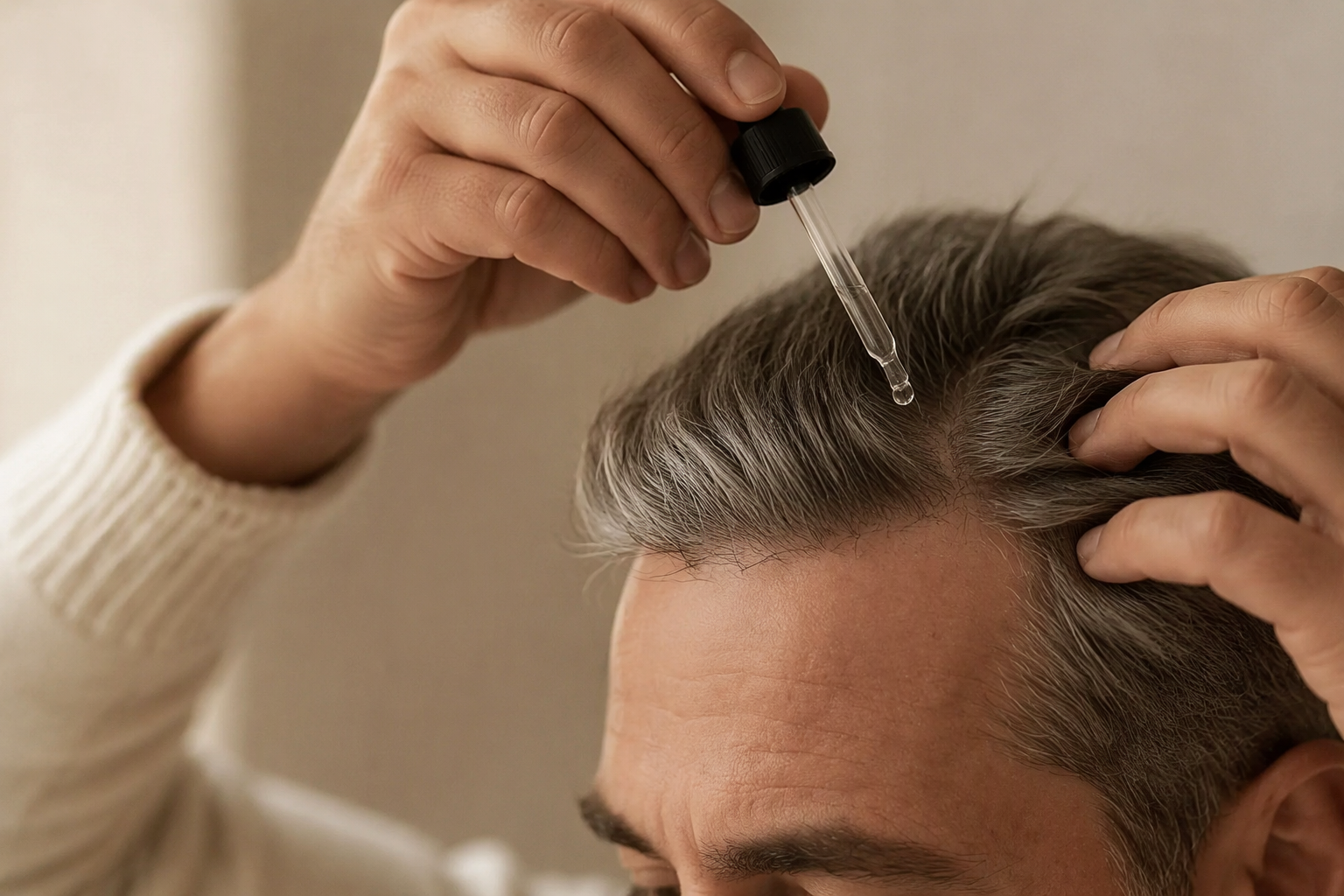
Hair loss drugs can have several goals:
- Stabilization: Slowing further deterioration.
- Thickening: Improving the caliber or appearance of existing hair.
- Regrowth: Producing visible hair where density has declined.
The likely outcome depends on the diagnosis and whether follicles remain capable of responding. Medication is generally less likely to restore long-standing, smooth, or severely depleted areas.
Our approach is simple: identify the cause, choose an appropriate treatment, assess safety, use it consistently, and measure the result.
Is there one best medicine for hair growth and thickness?
No. Treatment choice depends on the type of hair loss, medical history, preferred route, risk tolerance, goals, and ability to maintain the regimen.
A medication can be well studied but unsuitable for a particular person. Likewise, popularity online says little about safety or likely response.
FDA-approved versus off-label hair loss drugs
Approval applies to a specific formulation, dose, indication, and patient population. It does not cover every use of the same ingredient.
Topical minoxidil and oral finasteride have established roles in patterned hair loss, with finasteride’s hair-loss indication applying to men. Clinicians may also prescribe options such as low-dose oral minoxidil or compounded topical finasteride off-label after reviewing the evidence and individual risks.
Start With the Cause: Not Every Type of Hair Loss Needs the Same Drug
Gradual thinning, sudden diffuse shedding, smooth patches, and painful inflammatory loss are different problems. DHT-targeted drugs mainly address androgenetic alopecia. They do not correct every autoimmune, inflammatory, medication-related, hormonal, or nutritional trigger.
At rootsbyga.com, we treat genetic information as one part of the clinical picture—not a stand-alone diagnosis or guarantee of response.
Prompt assessment is sensible for rapid shedding, smooth bald patches, scalp pain, redness, pustules, heavy scaling, eyebrow loss, or visible scarring.
Androgenetic alopecia versus telogen effluvium
Androgenetic alopecia usually develops gradually in a recognizable pattern. Telogen effluvium more often causes diffuse shedding after a health event, major stressor, nutritional problem, medication change, or other disruption.
The two can occur together. We therefore consider the timeline, medical history, scalp findings, and recent health changes rather than relying on appearance alone.
Alopecia areata and scarring alopecia need different strategies
Alopecia areata is immune-mediated and may require corticosteroids or other specialist-directed treatment. A routine designed for patterned hair loss is not an adequate substitute.
Scarring alopecia can damage follicles permanently. Pain, inflammation, scaling, pustules, or shiny scarred areas warrant timely dermatology care.
Finasteride vs. Minoxidil: Different Mechanisms, Benefits, and Limits
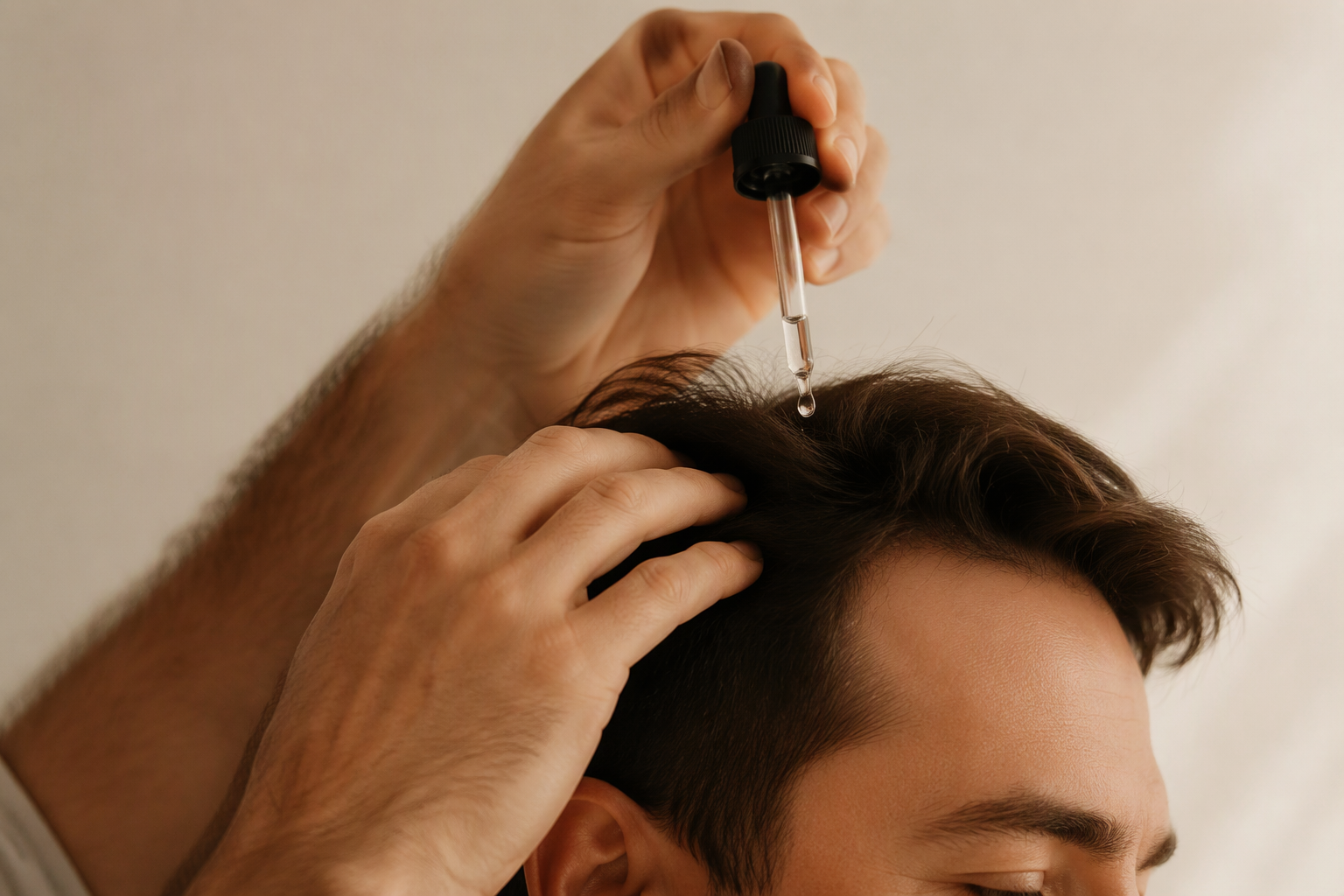
Finasteride and minoxidil are often paired, but they have different roles.
| Factor | Finasteride | Minoxidil |
|---|---|---|
| Main target | DHT-driven miniaturization | Follicle activity and growth cycling |
| Common route | Oral; topical forms may be compounded | Topical; oral use is off-label |
| Main role | Preservation and stabilization | Growth and improved hair caliber |
| Maintenance | Ongoing treatment is usually needed | Ongoing treatment is usually needed |
| Key concerns | Sexual, mood, fertility, and pregnancy-related considerations | Topical irritation; systemic concerns with oral use |
What finasteride may achieve
Finasteride can help preserve hair and slow DHT-related miniaturization in male androgenetic alopecia. Some people may also see regrowth, but stabilization can itself be a worthwhile result in a progressive condition.
It does not treat every cause of hair loss or reliably restore follicles affected by advanced, long-standing miniaturization.
What minoxidil may achieve
Minoxidil can support growth cycling and improve hair caliber. It does not directly remove the androgen signal associated with patterned hair loss, which is why clinicians may combine it with a DHT-targeted treatment.
Topical products can cause residue, scalp irritation, or unwanted hair through transfer. Oral treatment has different systemic considerations, covered in our guide to oral minoxidil for hair loss.
Oral vs. Topical Hair Loss Drugs: Route Changes the Tradeoffs
Topical does not mean risk-free, and oral does not automatically mean unsuitable. Route affects systemic exposure, convenience, formulation consistency, side effects, and monitoring.
Compounded combinations may simplify treatment, but customization alone does not prove better results. Dose, concentration, vehicle, application area, and prescribing rationale matter when considering a personalized combination approach.
Topical versus oral finasteride
Topical finasteride aims to deliver medication locally, but systemic absorption may still occur. We do not present it as automatically removing sexual, mood, fertility, or pregnancy-related concerns.
Counseling should cover application, storage, transfer precautions, and household pregnancy considerations.
Topical versus low-dose oral minoxidil
Topical minoxidil is an established treatment for patterned hair loss. Low-dose oral minoxidil is an off-label clinical use.
Oral treatment requires medical review, particularly for people with cardiovascular conditions, blood-pressure concerns, swelling, or potentially interacting medicines.
The “Big 3” Hair Loss Treatments Are Not a Universal Standard
The online “Big 3” usually refers to finasteride, minoxidil, and ketoconazole shampoo. It is shorthand, not a universal standard of care.
Finasteride targets DHT-related miniaturization, minoxidil supports growth cycling, and ketoconazole primarily addresses fungal or inflammatory scalp problems. Not everyone needs all three.
Why more regrowth products may produce worse real-world adherence
Complex routines create more opportunities for missed applications, irritation, duplicated ingredients, and abandonment. Starting several products together also makes benefits and side effects harder to identify.
We prefer a focused plan linked to specific goals. More products do not necessarily produce better results.
Where ketoconazole shampoo may fit
Ketoconazole may help when dandruff, fungal overgrowth, or seborrheic dermatitis contributes to scalp symptoms. It should not be treated as equivalent to the main drug therapies used for androgenetic alopecia.
Shampoo choice should reflect scalp needs rather than an automatic three-product formula.
Hair Loss Drug Side Effects: Put the Risks in Context
A useful risk discussion considers severity, reversibility, baseline health, route, dose, interactions, and treatment alternatives. Online anecdotes cannot establish how often an effect occurs, but concerns still deserve a serious response.
We advise contacting the prescriber before stopping a prescribed medication. Serious or rapidly developing symptoms require prompt medical attention.
Finasteride: neither blind enthusiasm nor blanket fear
Counseling should address potential sexual and mood-related effects, fertility plans, pregnancy-related handling, alternatives, and what to do if symptoms appear.
Baseline health and personal tolerance for risk belong in the treatment decision alongside possible benefits.
Minoxidil: scalp and cardiovascular considerations
Topical minoxidil can raise practical concerns such as dryness, redness, itching, residue, and unwanted hair outside the application area. Our overview of minoxidil side effects explains when review may be appropriate.
Oral minoxidil needs a different safety assessment because systemic effects can involve blood pressure, heart rate, or fluid retention.
Timelines, Shedding, Regrowth, and What Happens If You Stop
Hair treatment is evaluated over months rather than through daily mirror checks. The timing of visible change varies with the diagnosis, treatment, adherence, and individual response.
Minoxidil may temporarily increase shedding after treatment begins. That does not mean every episode is normal or that shedding proves treatment is working.
Stopping finasteride or minoxidil removes their ongoing support. The underlying process may resume, and maintained gains can gradually diminish.
How to tell early shedding from treatment failure
We consider timing, duration, severity, distribution, scalp symptoms, adherence, illness, stress, weight changes, and other medication changes.
Severe, prolonged, patchy, painful, or inflamed shedding deserves reassessment.
Why daily mirror checks mislead
Lighting, styling, hair length, moisture, angle, and camera exposure can change the appearance of density.
Use photographs taken with dry hair under consistent lighting, distance, angles, and styling. Compare them at planned intervals rather than every day.
What Common Drugs Can Cause Hair Loss?
Clinicians may review medicines such as anticoagulants, retinoids, some blood-pressure drugs, selected psychiatric or anticonvulsant medicines, hormone-altering treatments, and chemotherapy.
An association does not prove causation. Illness, surgery, stress, weight change, or nutritional problems may contribute instead of—or alongside—a medication.
How clinicians assess suspected drug-induced shedding
The review usually covers when treatment started or changed, when shedding appeared, its pattern, and other possible triggers. Prescriptions, supplements, recent illnesses, surgery, weight changes, and relevant test results may all matter.
Hair recovery can lag behind correction of the trigger because growth cycles change gradually.
When medication-related loss needs faster evaluation
Rapid or severe shedding, systemic illness, inflammation, patchy loss, eyebrow involvement, pain, pustules, or scarring needs faster assessment.
Never stop or alter a necessary prescription without guidance from the clinician managing it.
How to Build a Personalized, Measurable Hair Loss Treatment Plan
We recommend five steps:
- Confirm the diagnosis.
- Define the goal: stabilization, thickening, or regrowth.
- Review safety, preferences, and practical constraints.
- Select a focused regimen.
- Measure the response before making changes.
Genetics may add useful context, but credible personalization requires ongoing evaluation rather than a one-time product match.
Measure progress before changing the plan
Photograph the front, temples, part, and crown under consistent conditions. Clinicians may also assess scalp health, hair caliber, symptoms, and treatment adherence.
When medically appropriate, introducing treatments in stages can make benefits and adverse effects easier to identify.
A practical checklist for the treatment conversation
Discuss:
- All medicines and supplements
- Medical history and previous reactions
- Cardiovascular and blood-pressure history
- Mood, sexual-health, and fertility concerns
- Pregnancy-related handling precautions
- Cost and dosing preferences
- Approved versus off-label use
- Review timelines and warning symptoms
A treatment cannot work in practice if it is too irritating, expensive, complicated, or inconvenient to continue.
FAQ
Does blocking DHT stop hair loss?
It may slow or stabilize androgenetic alopecia, particularly in men, but it does not guarantee complete cessation or regrowth. DHT-targeted treatment will not correct every autoimmune, inflammatory, nutritional, medication-related, or stress-related cause.
What is the best pill for hair loss?
There is no universally best pill. Oral finasteride has an established role in male androgenetic alopecia, while low-dose oral minoxidil may be prescribed off-label. The choice depends on diagnosis, health history, risks, interactions, and monitoring needs.
What are the Big 3 hair loss treatments?
The term usually means finasteride, minoxidil, and ketoconazole shampoo. It is an internet convention rather than a treatment standard, and not everyone needs all three.
What common drugs cause hair loss?
Several medication categories may be associated with shedding, including anticoagulants, retinoids, certain blood-pressure or psychiatric medicines, hormone-altering treatments, and chemotherapy. A clinician should assess timing and alternative causes before drawing conclusions.
Is minoxidil shedding a sign that treatment is working?
Not necessarily. Temporary shedding can occur after starting minoxidil, but it does not prove success. Persistent, severe, painful, inflamed, or patchy loss should be reviewed.
Build a Hair Loss Plan Based on Evidence, Not Guesswork
Explore rootsbyga.com to build a personalized, science-led hair loss plan based on genetic context, clinical judgment, transparent tradeoffs, and consistent progress tracking.
Roots by Genetic Arts
4 Nov 2026
Thanks for your order!
Login into your profile to set up your account.