
31 Oct 2026
Minoxidil for Men: Results, Risks, and How to Know If It Fits
Learn how minoxidil may support hair regrowth, what results and side effects to expect, and when it may fit your hair loss plan. Explore the guide.
Share


TL;DR
Minoxidil for men can support hair maintenance or regrowth, particularly when male pattern hair loss is identified early and treatment is consistent. Results vary, and minoxidil does not directly block DHT or permanently cure hair loss. We recommend confirming the cause of thinning, choosing a tolerable formulation, taking standardized photos, and reviewing progress at regular intervals.
Table of Contents
- Minoxidil for men: what it can—and cannot—do
- Who is most likely to benefit from minoxidil?
- Foam, liquid, or pills: which form of minoxidil makes sense?
- What to expect after 3, 6, and 12 months
- How to apply topical minoxidil correctly
- Minoxidil side effects: common reactions and warning signs
- What happens if you stop using minoxidil?
- Beyond minoxidil: build a personalized hair-loss plan
- FAQ
- Stop guessing, start growing
Minoxidil for men: what it can—and cannot—do
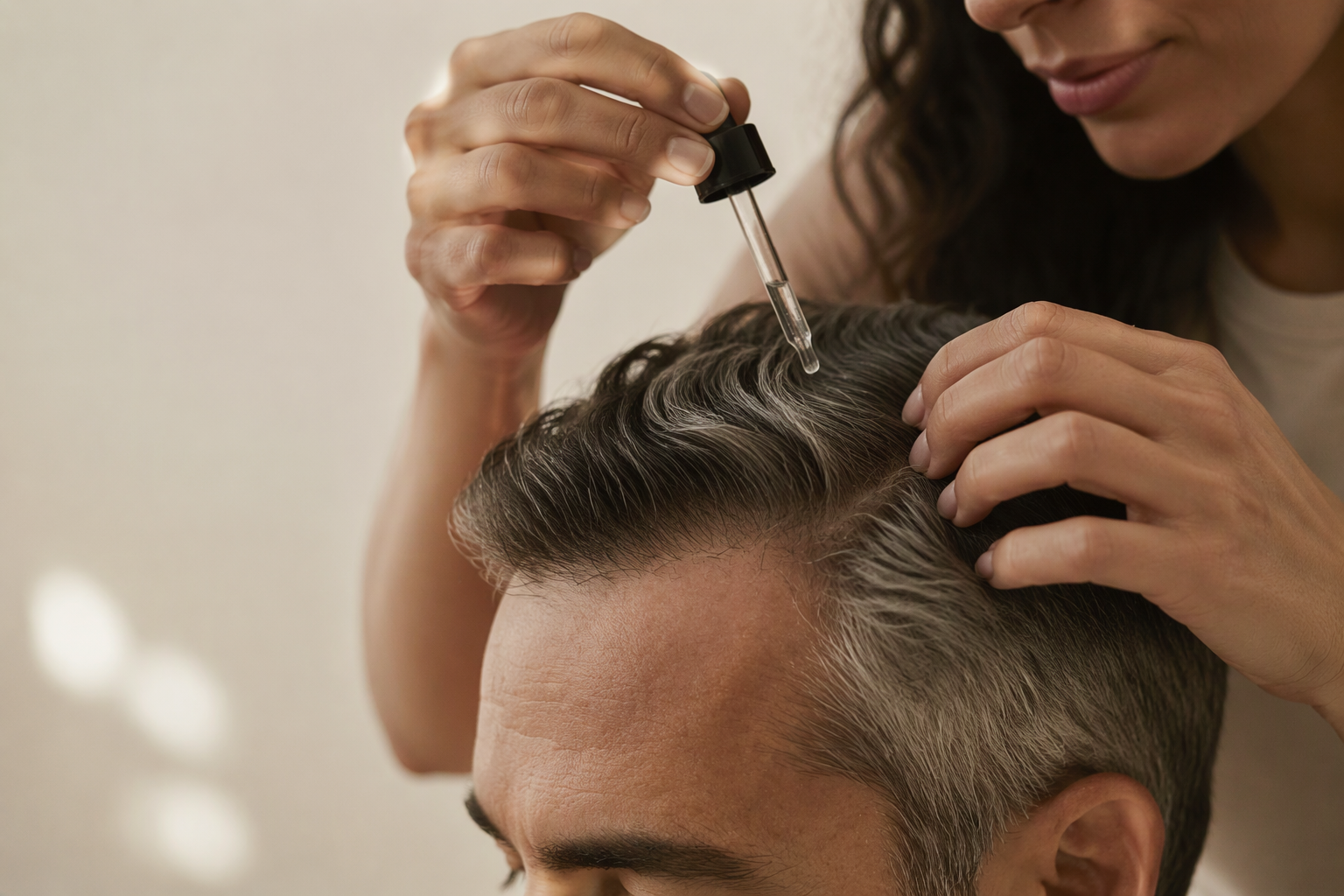
Minoxidil can help some men maintain or regrow hair when used consistently for androgenetic alopecia, also called male pattern hair loss. “Clinically proven” does not mean guaranteed regrowth, permanent results, or the right standalone treatment for every person.
Topical minoxidil is a hair-growth stimulant. It does not diagnose the cause of thinning, revive every inactive follicle, or directly block dihydrotestosterone (DHT).
The FDA first approved topical minoxidil for hair regrowth in 1988, according to the International Society of Hair Restoration Surgery. A realistic outcome may be slower progression, better maintenance, or improved density rather than a dramatic transformation.
We recommend starting with six questions:
- What is causing the hair loss?
- Is minoxidil appropriate for that diagnosis?
- Which formulation fits the routine?
- Are there health or medication risks?
- Can treatment be followed consistently?
- How will progress be measured?
How minoxidil supports the hair-growth cycle
Hair follicles move through growth, transition, rest, and shedding phases. Minoxidil appears to influence follicle activity and may help some follicles remain active or return to growth.
Its full mechanism is not settled. Increased blood flow may contribute, but describing minoxidil solely as a way to “bring more blood to the scalp” oversimplifies how it works.
Is minoxidil a permanent cure?
No. Minoxidil does not remove the biological drivers of androgenetic alopecia. Hair maintained or regrown with treatment generally depends on continued use. If treatment stops, those gains may fade as the underlying condition continues.
Who is most likely to benefit from minoxidil?
Male pattern hair loss usually develops gradually around the crown, frontal scalp, temples, or hairline. Earlier thinning may offer more opportunity for improvement than a long-standing smooth area that no longer produces visible hair.
Results can depend on:
- The diagnosis and pattern of loss
- How long thinning has been present
- Consistency and application technique
- Scalp tolerance
- The chosen formulation
- Whether other treatments are being used
Response can also differ across scalp areas. Some men use minoxidil for frontal thinning or a receding hairline under clinical guidance, but results at the hairline and temples should not be guaranteed.
Male pattern hair loss versus other causes of shedding
Minoxidil is primarily used for androgenetic alopecia. We do not recommend treating every kind of shedding as male pattern hair loss.
Other possible causes include:
- Telogen effluvium after illness, stress, or another trigger
- Alopecia areata, which can cause distinct patches
- Medication-related shedding
- Nutritional deficiencies
- Inflamed or infected scalp conditions
- Scarring forms of hair loss
Sudden, patchy, painful, inflamed, scarring, or otherwise unexplained hair loss needs clinical assessment. Treating without a diagnosis can delay appropriate care.
Can genetics predict whether minoxidil will work?
Genetics can affect hair-loss progression and treatment response, but a consumer genetic result cannot guarantee success or failure. We view genetics as one part of a broader assessment that also considers scalp findings, medical history, progression, tolerance, and treatment consistency.
Foam, liquid, or pills: which form of minoxidil makes sense?
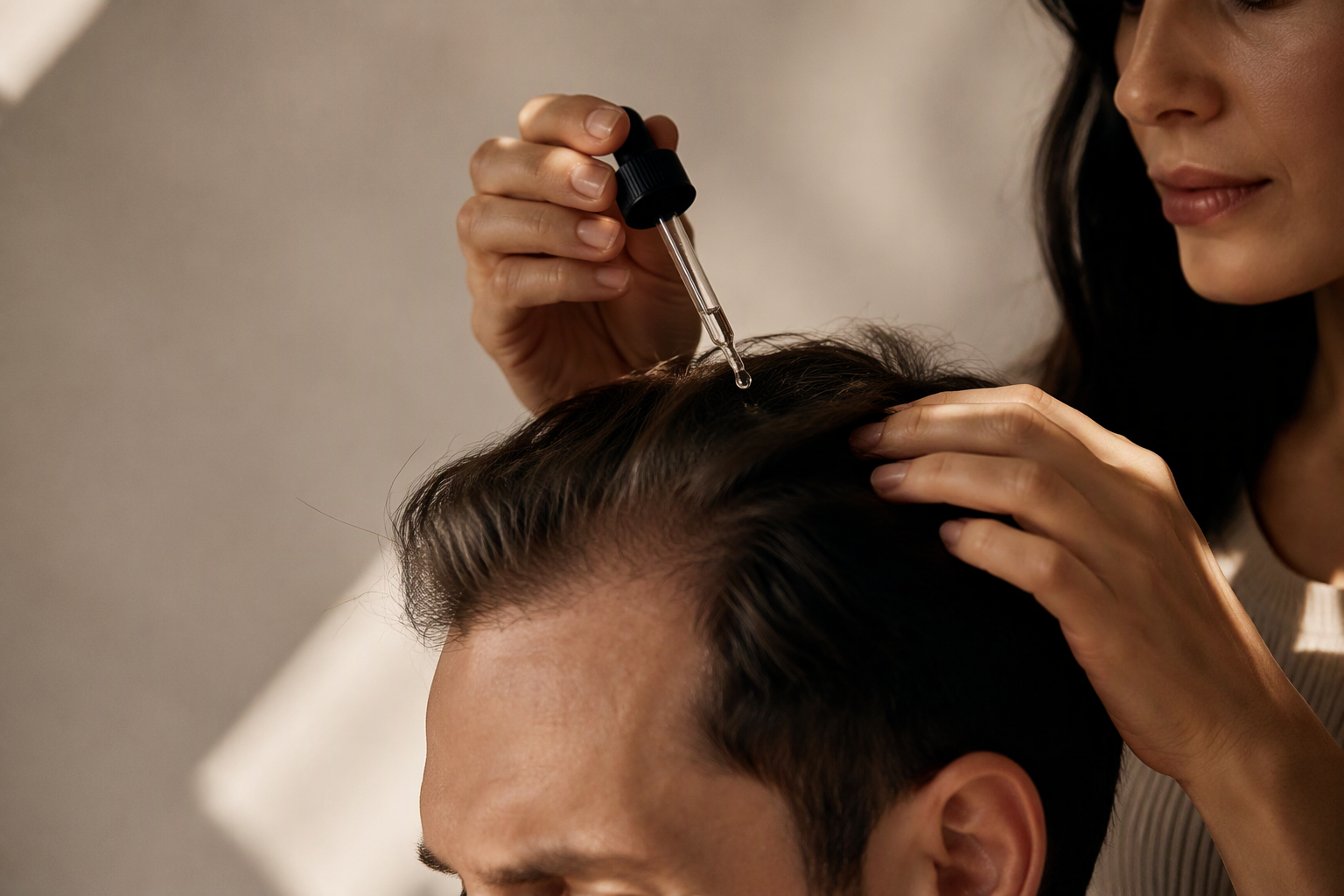
There is no single best formulation for every man. The practical choice depends on tolerability, convenience, cost, application preferences, and medical oversight.
Topical minoxidil is commonly sold as liquid or foam, including products in 5% concentrations. Directions vary, so we recommend following the label for the specific product rather than assuming every formulation uses the same amount or schedule.
Low-dose oral minoxidil for hair loss requires a prescription and is used off-label in the United States. Our minoxidil pill treatment guide covers its potential role and why medical supervision matters.
5% foam versus 5% liquid
Liquid minoxidil allows application with a dropper and may be less expensive. Some liquid products contain propylene glycol, which can contribute to itching, flaking, residue, or irritation in susceptible users.
Foam may dry faster and often avoids propylene glycol, but it is not automatically more effective or comfortable. Hair length, scalp coverage, styling, and price all affect the choice.
If irritation develops, the cause could be minoxidil, another ingredient, overapplication, or a separate scalp condition. We recommend assessing the reaction before repeatedly switching products or abandoning treatment.
Low-dose oral minoxidil
A clinician may consider oral minoxidil when topical treatment is impractical or poorly tolerated. Because oral treatment creates systemic exposure, health screening and monitoring are necessary.
Potential concerns include fluid retention, dizziness, low blood pressure, heartbeat changes, unwanted facial or body hair, and medication interactions. Cardiovascular history, blood pressure, and current medicines should be reviewed before treatment. Do not combine, switch, or adjust oral and topical minoxidil without medical guidance.
What to expect after 3, 6, and 12 months
Minoxidil should not be judged through daily mirror checks. Visible change takes time, and temporary shedding can occur as follicles move between cycle phases. Severe, persistent, or otherwise concerning shedding warrants assessment.
We use three, six, and twelve months as practical review points. These are opportunities to check application technique, consistency, side effects, diagnosis, and standardized photographs.
Months 0–3: adjustment and possible shedding
Early visible regrowth may be limited. Some men notice shedding or scalp irritation, while others do not.
Shedding is not required and does not prove that treatment will work. If it becomes severe or appears with pain, inflammation, dizziness, swelling, or other symptoms, seek medical advice.
Months 3–6: stabilization and early visible change
Possible signs of response include slower progression, short new hairs, or improved coverage. None is guaranteed.
Photographs taken under the same lighting, angle, distance, and hairstyle offer a more useful comparison than daily shed counts. We also recommend recording missed applications and formulation changes.
Months 6–12: judging the response
A longer review can show whether hair loss has stabilized or density has changed. If there is no meaningful improvement, revisit the diagnosis, technique, and consistency before applying more product or changing the dose.
How to apply topical minoxidil correctly
Apply the label-specified amount directly to a dry scalp in the thinning area. Part the hair so the product reaches the skin rather than coating the strands. Wash your hands afterward and allow the area to dry before covering it or going to bed.
More is not better. Extra product may increase irritation or unwanted exposure without producing faster growth. If an application is missed, resume the normal schedule rather than doubling the next dose.
A simple application routine
- Begin with a dry scalp.
- Part the hair to expose the treatment area.
- Measure the amount stated on the label.
- Apply it directly to the scalp.
- Let the area dry fully.
- Wash your hands and clean any spills.
Common application mistakes
Frequent mistakes include overapplication, inconsistent use, coating the hair instead of the scalp, and changing formulations too quickly. Some people also stop as soon as shedding occurs without checking whether it is temporary or has another cause.
Minoxidil side effects: common reactions and warning signs
Topical minoxidil is available without a prescription, but it is not risk-free. Local reactions are more common than systemic effects.
Men with cardiovascular disease, low blood pressure, unexplained scalp disease, or relevant medication use should speak with a clinician first. Our guide to pre-treatment risk screening can help prepare for that conversation.
More common effects
Possible effects include:
- Itching, dryness, or flaking
- Redness or irritation
- Temporary shedding
- Unwanted facial or body hair
Unwanted facial hair may result from dripping, transfer, or inaccurate placement. Careful scalp application, handwashing, and complete drying can reduce accidental exposure.
When to stop and seek medical advice
Stop treatment and seek prompt medical advice for chest pain, fainting, marked dizziness, a rapid or irregular heartbeat, swelling, sudden weight change, or difficulty breathing. Severe scalp inflammation, a persistent reaction, or signs of allergy also require assessment.
What happens if you stop using minoxidil?
Hair maintained or regrown with minoxidil may be lost after treatment ends. Stopping does not cure or pause the underlying condition; it removes the treatment effect while hair loss continues along its natural course.
Why the gains fade
Minoxidil supports follicle activity while it is being used. It does not permanently remove androgen sensitivity or another cause of thinning. This makes minoxidil an ongoing management option rather than a one-time course.
When it may be time to change the plan
Reassessment makes sense when treatment causes intolerable irritation, systemic symptoms, poor adherence, or no meaningful response after a reasonable trial. A changing pattern of hair loss also deserves review. Oral minoxidil changes should always be clinician-guided.
Beyond minoxidil: build a personalized hair-loss plan
Stimulating growth and addressing the cause of hair loss are separate goals. For androgenetic alopecia, a clinician may consider treatments with different mechanisms, but combination therapy is not appropriate for everyone.
Our comparison of minoxidil and finasteride explains how their roles differ. We build treatment decisions around diagnosis, progression, family history, genetic context, health risks, preferences, and measured response.
Minoxidil stimulates growth but does not directly block DHT
DHT can gradually shrink susceptible scalp follicles, producing finer and shorter hairs. Minoxidil may support follicle activity, but it does not directly block that androgen-driven process.
Another treatment may address a different mechanism. Its benefits, contraindications, and side effects still require individual review.
How to track whether your plan is working
Take baseline and follow-up photographs using consistent:
- Lighting
- Camera distance
- Scalp angle
- Hairstyle and hair length
- Wet-or-dry condition
Record treatment consistency, irritation, illnesses, medication changes, and other therapies. We use those details to separate a true response from changes caused by lighting, styling, or inconsistent use.
Frequently asked questions
The answers below provide general guidance. An individual recommendation still depends on the cause, pattern, and medical context of the hair loss.
FAQ
Does minoxidil actually work for men?
It can help some men maintain density, slow visible progression, or regrow some hair, particularly with androgenetic alopecia. Response varies, so we recommend consistent use and objective progress tracking rather than expecting guaranteed regrowth.
What is the main downside of minoxidil?
The main drawbacks are ongoing use, variable results, scalp irritation, possible shedding, unwanted hair growth, and the time needed to assess a response. Oral minoxidil also carries systemic risks and requires medical supervision.
Can minoxidil permanently regrow hair?
No. Minoxidil does not permanently reverse male pattern hair loss. Treatment-supported hair generally depends on continued use and may be lost after treatment stops.
What should happen after three months?
Some men notice stabilization, early growth, or changes in shedding; others see little visible difference. We recommend reviewing technique, consistency, side effects, and photographs rather than treating three months as a pass-or-fail deadline.
Does minoxidil work on a receding hairline or temples?
It may help some men, but responses vary. Long-standing smooth areas may be less responsive than areas with visible miniaturized hair. A clinician can help confirm the diagnosis and set realistic expectations.
Stop guessing, start growing
Visit rootsbyga.com to build a personalized hair-loss plan around your diagnosis, health risks, preferences, and measurable progress.
Roots by Genetic Arts
31 Oct 2026
Thanks for your order!
Login into your profile to set up your account.