
5 Nov 2026
PP405 for hair loss: what the clinical evidence actually shows
Learn what PP405 hair loss trials really show, including Phase 2a limits, safety questions, and why proven treatment options matter. Read the evidence.
Share


TL;DR
PP405 for hair loss is an investigational topical drug from Pelage Pharmaceuticals. It is not an FDA-approved treatment or a proven cure. The company has reported positive results from a randomized, placebo-controlled Phase 2a trial, but the supplied material does not provide detailed efficacy or safety data. While research continues, we recommend identifying the cause of hair loss and considering established options rather than waiting for PP405 or trying to buy an unauthorized product.
Table of Contents
- TL;DR
- PP405 for hair loss: the answer in 60 seconds
- How PP405 is designed to wake up dormant hair follicle stem cells
- What the PP405 clinical trial result actually showed
- PP405 side effects and the questions trials still need to answer
- When could PP405 be available—and can you buy it now?
- PP405 vs minoxidil and finasteride
- Do not wait for PP405 before investigating hair loss
- A personalized hair loss plan you can act on now
- FAQ
- Build an evidence-led hair loss plan
PP405 for hair loss: the answer in 60 seconds
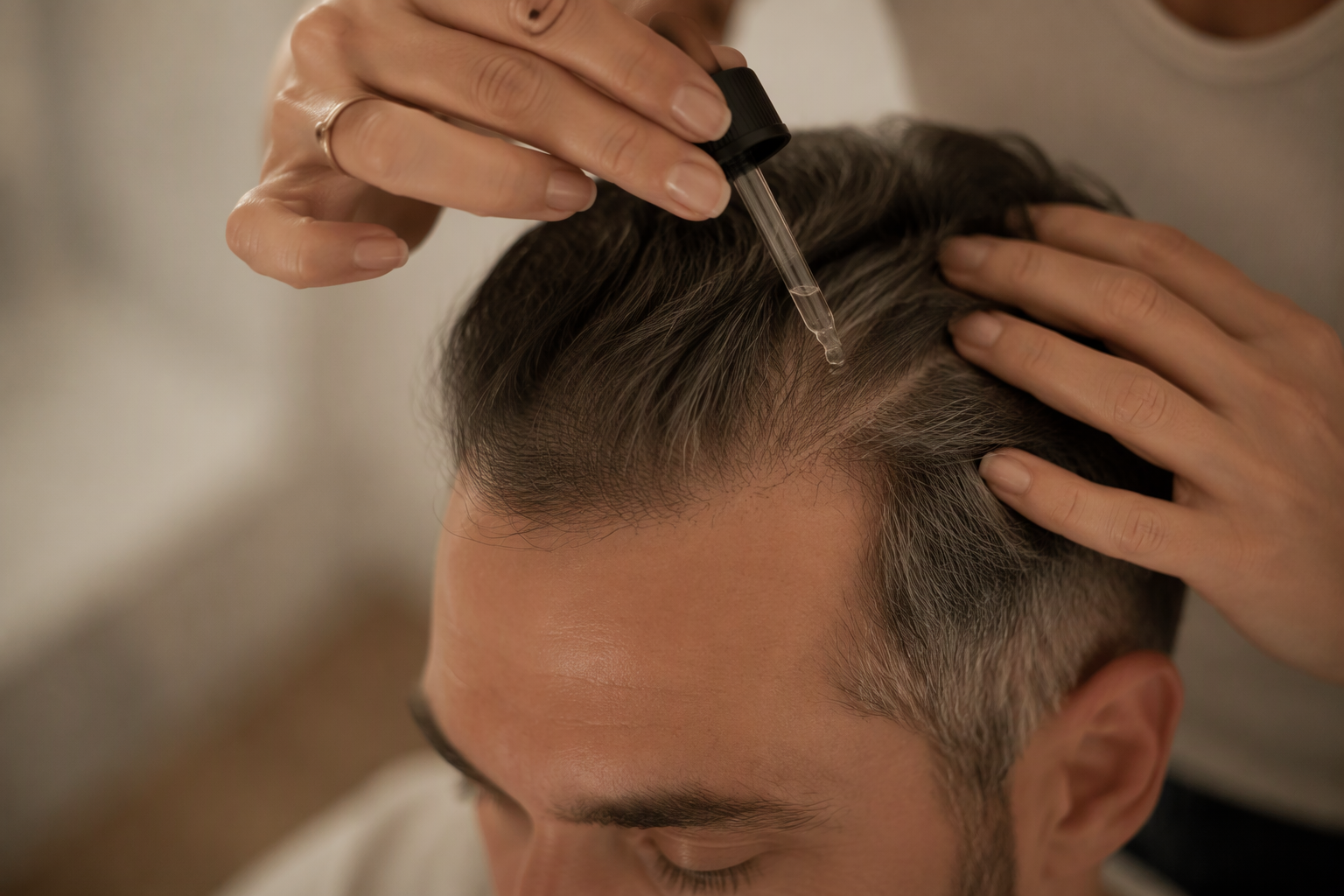
PP405 is a topical small molecule being developed by Pelage Pharmaceuticals. It is designed to reactivate dormant hair follicle stem cells and encourage hair growth.
Pelage reported positive results from a randomized, placebo-controlled Phase 2a trial in androgenetic alopecia. In October 2025, the company also announced $120 million in Series B financing and said it planned to advance PP405 into Phase 3 trials in 2026. The supplied source does not confirm whether a Phase 3 study has since begun or provide a current trial-registry record.
PP405 remains investigational. It cannot accurately be described as an available treatment or cure.
Is PP405 the latest hair loss cure?
No. A positive early trial announcement does not prove that PP405 works for most people, restores long-bald areas or provides permanent results.
Regulatory approval requires a convincing balance of benefits and risks, along with reliable manufacturing and formal review. A company announcement cannot replace that process.
Who is developing PP405?
Pelage Pharmaceuticals is developing PP405. Its financing may support further research, but investment is not clinical evidence and does not guarantee approval.
PP405 is separate from the personalized genetic insights offered by Roots by Genetic Arts. We do not sell, prescribe or provide access to the drug.
How PP405 is designed to wake up dormant hair follicle stem cells
PP405 is designed to alter cellular metabolism so dormant hair follicle stem cells may return to an active growth state. That mechanism is promising, but a plausible mechanism does not establish clinical effectiveness.
A miniaturized follicle may still produce a fine hair. A scarred or structurally damaged follicle may be unable to produce cosmetically meaningful hair even if some stem cells remain.
Dormant does not mean dead—or guaranteed to recover
Dormancy may be reversible, but recovery can depend on the diagnosis, degree of miniaturization, inflammation and surrounding tissue.
“Waking up” stem cells therefore does not guarantee that PP405 could rebuild every temple, crown or hairline. Trials must show whether its biological effect translates into visible, durable growth.
Could PP405 work on long-bald areas?
There is not enough published evidence to promise regrowth in areas that have been bald for years. Long-bald scalp may have fewer viable follicular structures or a less supportive tissue environment than recently thinning areas.
Future research will need to identify which stages and types of hair loss remain responsive.
What the PP405 clinical trial result actually showed

The supplied company announcement describes the Phase 2a findings as positive and says the trial was randomized and placebo-controlled. It does not provide enough detailed endpoint data for us to calculate response rates, judge cosmetic improvement or compare outcomes across all participants.
That distinction matters. A measured change in a defined scalp area is not automatically equivalent to a restored hairline, thicker strands or greater satisfaction with appearance.
Would a measured density increase look noticeable?
Possibly, but noticeability depends on baseline density, strand thickness, hair color, curl, location and styling. Photography can also exaggerate differences when lighting, angles or hair length change.
Standardized counts are useful trial endpoints. They do not guarantee an equally visible result for every participant.
Why subgroup evidence requires caution
Subgroup findings depend on how many people were included, whether the analysis was planned in advance and whether later studies reproduce the result.
Specific subgroup figures repeated online cannot be verified from the supplied official announcement. We would want full trial data or a peer-reviewed publication before treating them as established evidence.
What a larger study may clarify
Further trials could show:
- How often participants respond
- Whether outcomes vary by hair-loss stage
- Which dose and regimen work best
- Whether growth is cosmetically meaningful
- How long any benefit lasts
- Which adverse events occur with broader exposure
Until those results are available, effectiveness and durability remain uncertain.
PP405 side effects and the questions trials still need to answer
A topical drug is not automatically risk-free. Researchers still need to assess scalp reactions, systemic absorption, interactions and the effects of repeated use.
Early trials may also be too limited to detect uncommon or delayed problems.
What has been reported so far
The supplied announcement calls the Phase 2a results positive but does not include detailed adverse-event tables or specific side-effect rates. We therefore cannot conclude that PP405 has no meaningful risks.
A short company summary is not a substitute for complete trial results, registry data or peer-reviewed safety findings.
What remains unknown
Open questions include:
- Long-term local and systemic safety
- Rare or delayed adverse events
- Drug interactions and contraindications
- Appropriate candidates
- Application frequency and treatment duration
- Whether continuous use would be necessary
- What happens after treatment stops
These uncertainties are normal for an investigational drug, but they should not be minimized.
When could PP405 be available—and can you buy it now?
PP405 has no established retail price or legitimate consumer purchase route while it remains investigational. A website claiming to sell PP405 is not equivalent to a licensed pharmacy offering an authorized medicine.
Development may still require further trials, safety analysis, regulatory submission, manufacturing validation, review and commercialization. Pelage’s plans are projections rather than regulatory commitments.
PP405 cost, reviews, Reddit posts, and before-and-after claims
There is no established retail PP405 cost or broad base of verified consumer reviews. Anonymous posts, testimonials and trial evidence are not interchangeable.
Packaging images do not prove authenticity. Marketplace products should not be assumed to contain PP405 or to be safe.
Why an approval date cannot yet be promised
Timing depends on trial outcomes, regulatory requirements and manufacturing readiness. Delays or additional studies are always possible.
We recommend relying on dated trial registries, regulatory records, peer-reviewed papers and developer announcements rather than speculative launch dates.
PP405 vs minoxidil and finasteride
Minoxidil and finasteride have substantially more clinical evidence and real-world use behind them. Neither is appropriate for everyone, but PP405 has not been shown to replace either treatment.
| Factor | PP405 | Minoxidil | Finasteride |
|---|---|---|---|
| Approach | Proposed activation of dormant follicle stem cells | Promotes hair growth through a different pathway | Reduces conversion of testosterone to DHT |
| Evidence | Early clinical development | Established evidence | Established evidence |
| Status | Investigational | Approved topical products; oral use for hair loss is off-label | Prescription treatment approved for male pattern hair loss |
| Main limitation | Effectiveness and durability remain uncertain | Tolerance, adherence and response vary | Risks and suitability require individual review |
Anyone considering oral minoxidil should review its risks and monitoring needs in our minoxidil pill treatment guide. Our review of VDPHL01 extended-release oral minoxidil also separates research findings from availability claims.
Does Propecia reverse hair loss?
Propecia is a brand of finasteride. It can slow androgenetic hair loss and may produce some regrowth, but complete restoration is not a realistic expectation for everyone.
Finasteride targets DHT-driven miniaturization rather than every cause of shedding. Its benefits and risks should be discussed with a qualified prescriber.
Would PP405 target a different part of the problem?
Potentially. PP405 is intended to activate follicle stem cells, while finasteride reduces DHT and minoxidil promotes growth through another pathway.
These mechanisms might eventually prove complementary, but combinations must be tested. The same caution applies to emerging options such as clascoterone for hair loss: biological rationale is not the same as confirmed clinical benefit.
Do not wait for PP405 before investigating hair loss
Gradual temple recession or crown thinning may suggest androgenetic alopecia. Sudden shedding, patches, pain, redness or scarring require broader evaluation.
Other possible causes include telogen effluvium, nutritional deficiencies, thyroid disorders, traction and inflammatory scalp disease. Waiting for an investigational drug could allow a treatable condition to progress.
Can hormone pellets make your hair fall out?
Hormonal treatment may coincide with shedding or androgen-sensitive changes in some people. Timing can provide a clue, but it does not prove the cause.
Illness, stress, nutrition, thyroid function and other medicines may overlap. Prescribed treatment should not be stopped without clinical guidance.
When hair loss may not be primarily genetic
Warning signs include sudden diffuse shedding, defined patches, broken hairs, scalp pain, scaling, redness or signs of scarring.
Genetic testing can provide useful context, but it cannot replace examination, medical history or appropriate laboratory testing.
A personalized hair loss plan you can act on now
We recommend starting with diagnosis-informed evidence rather than the latest headline. A practical plan records the pattern and timing of loss, reviews possible triggers, considers established treatments and tracks progress consistently.
Scalp tolerance, side-effect concerns, convenience, cost and willingness to continue treatment all affect real-world results.
What personalization can—and cannot—tell you
Personalized genetic insights can clarify inherited susceptibility and support a more informed conversation with a clinician. They cannot diagnose every cause, guarantee treatment response or make PP405 available.
Our view is that genetic information works best as one part of a broader assessment.
What to do while PP405 remains in trials
Establish a diagnosis, document a reliable baseline and discuss current evidence-based options. Review progress at planned intervals using consistent lighting, angles and hair length.
Frequent treatment changes based on online posts can make results difficult to interpret. Consistency produces better information.
FAQ
Is PP405 a cure for hair loss?
No. PP405 is an investigational drug with company-reported positive Phase 2a findings. Permanent or universal hair restoration has not been established.
Is PP405 FDA-approved, and can I buy it?
No. PP405 is not an FDA-approved commercial hair-loss product, and there is no legitimate retail purchase route.
When might PP405 become available?
No reliable date can be promised. Availability depends on successful trials, regulatory review, manufacturing and commercialization.
What are the possible PP405 side effects?
The supplied announcement does not provide enough detail to define specific side effects or rates. Larger and longer studies are needed.
Will PP405 work on a completely bald area?
There is not enough evidence to make that promise. Results may depend on whether viable follicular structures remain and whether inflammation or scarring is present.
Are PP405 reviews and before-and-after photos trustworthy?
Treat anonymous reviews and promotional images cautiously. Reliable photographs require standardized conditions and a clear connection to controlled trial outcomes.
Build an evidence-led hair loss plan
Do not put current hair loss care on hold for an investigational drug. Explore personalized insights at rootsbyga.com and use them alongside qualified medical evaluation to build a plan based on your biology, diagnosis and goals.
Roots by Genetic Arts
5 Nov 2026
Thanks for your order!
Login into your profile to set up your account.