
30 Oct 2026
Compare Leading Online Hair Loss Treatment Plans That May Include Minoxidil, Finasteride, Supplements, or Customized Treatment
Compare minoxidil, finasteride, supplements, costs, safety screening, and personalized care to find an online hair loss plan that fits your needs.

Share


TL;DR
We compare leading online hair loss treatment plans that may include minoxidil, finasteride, supplements, or customized formulas by looking beyond the ingredient list. We assess diagnosis, dose transparency, safety screening, clinician access, pharmacy source, recurring cost, and what “personalized” care actually changes. The right plan may involve one medication, combination treatment, targeted supplementation, genetic-informed care, an in-person referral, or no subscription at all.
Table of Contents
- TL;DR
- Compare Leading Online Hair Loss Treatment Plans That May Include Minoxidil, Finasteride, Supplements, or Customized Care
- Diagnose the Hair Loss Before Choosing a Subscription
- Minoxidil, Finasteride, Both, or Neither? Match the Plan to the Goal
- Topical Minoxidil vs. Low-Dose Oral Minoxidil
- Oral vs. Topical Finasteride: DHT Reduction, Risks, and Product Status
- Genetic-Informed Hair Care: Useful Context, Not a Crystal Ball
- Supplements and Compounded Formulas: Look Beyond the Ingredient List
- Treatment Timeline, Maintenance, and What Happens If You Stop
- How to Choose an Online Hair Loss Provider
- FAQ
- Stop Guessing, Start Growing
Compare Leading Online Hair Loss Treatment Plans That May Include Minoxidil, Finasteride, Supplements, or Customized Care

Two people can have similar receding hairlines yet need different treatment discussions. Their health histories, hair-loss patterns, medications, goals, and risk factors may not match. For that reason, we do not name one universal “best” online treatment without first asking what may be causing the loss.
The scorecard below compares plan types rather than declaring a one-size-fits-all winner. Products, eligibility rules, prescribing practices, and prices vary by provider and jurisdiction. Confirm the details before purchasing.
| Comparison point | Standard quiz-based plan | Single-medication plan | Combination plan | Supplement-led plan | Genetic-informed care |
|---|---|---|---|---|---|
| Typical approach | Questionnaire and photographs route eligible patients toward standard options | One active treatment, such as minoxidil or finasteride | Multiple medications, sometimes combined in one formula | Nutrient or botanical blend sold for hair support | Genetic context combined with history, photographs, safety screening, and follow-up |
| Ingredients | Often minoxidil, finasteride, or both | Usually easy to identify, but dose still matters | May include minoxidil, finasteride, dutasteride, or other ingredients | Vitamins, minerals, botanicals, or proprietary blends | Depends on the assessment rather than a fixed bundle |
| Dose disclosure | Varies; details may appear only after approval | Often straightforward | Essential because concentrations differ | Amounts may be unclear in proprietary blends | Should be documented with a reason for each selection |
| Delivery | Oral, topical, or a limited choice | Oral or topical | Oral, topical, or mixed | Capsules, powders, or gummies | Prescription, nonprescription, topical, oral, or referral as appropriate |
| Clinical access | Often asynchronous; follow-up varies | Ranges from basic screening to ongoing care | Follow-up matters because complexity increases | Often limited unless connected to medical care | Should include qualified review and a clear follow-up route |
| Diagnostic input | Questionnaire and submitted photographs | May assume the chosen drug fits the diagnosis | May focus on patterned loss without considering other causes | May not establish whether a deficiency exists | Should integrate genetics with clinical findings, not use genetics alone |
| Testing | Often none | Usually none unless requested | May be ordered when clinically indicated | Sometimes offered as an add-on | May include genetic testing and clinically indicated laboratory work |
| Pharmacy source | Should be disclosed | Retail, mail-order, or compounding pharmacy | Frequently a compounding pharmacy | Manufacturer or supplement distributor | Should be disclosed for each prescribed product |
| Refill model | Automatic subscriptions are common | Recurring or one-time, depending on the product | Automatic refills are common | Subscription bundles are common | Should include reassessment, not only passive renewal |
| Main advantage | Convenient access | Simpler routine and easier troubleshooting | Complementary mechanisms may suit selected patients | May correct an identified nutritional need | Adds individual context and clearer treatment reasoning |
| Main limitation | “Personalized” may mean basic routing | One drug may not address the cause or goal | More cost, complexity, and potential adverse effects | Often sold without evidence of deficiency | More data help only when they change a reasonable decision |
Off-label prescribing note: Some clinicians prescribe low-dose oral minoxidil for hair loss. In the United States, this is an off-label use. Off-label prescribing is not automatically inappropriate, but it requires transparent counseling and individualized assessment.
Compounding note: A compounded formula may address a legitimate clinical need. However, a compounded product is not the same as an FDA-approved finished drug and does not undergo the same premarket review as that finished formulation.
The right choice depends on the suspected diagnosis, medical history, contraindications, route preference, budget, tolerance for risk, and willingness to maintain treatment.
What “Personalized” Should Mean in an Online Plan
Meaningful personalization changes the recommendation. A provider should be able to explain why it recommends minoxidil, finasteride, both, neither, targeted testing, or an in-person assessment.
A short quiz can support basic safety screening. It does not automatically amount to individualized care. If nearly every eligible customer receives the same option, the service is mainly routing patients toward standardized treatment.
We look for decisions that account for:
- The pattern, location, speed, and duration of hair loss
- Recent illness, surgery, severe stress, or rapid weight change
- Current medications and possible interactions
- Cardiovascular history, blood-pressure concerns, dizziness, or swelling
- Sexual, reproductive, breast, or mood-related concerns
- Scalp symptoms or signs of inflammatory and scarring conditions
- Laboratory findings when deficiency or systemic illness is suspected
- Treatment goals, route preferences, budget, and routine
- Previous response, adherence, and adverse effects
- Genetic context when it is integrated with clinical evidence
A customized plan should also define what would trigger a change. Relevant developments might include adverse effects, worsening loss, a new diagnosis, poor adherence, new test findings, or little progress after a clinician-defined trial.
How to Calculate the True Monthly Price
The advertised price may not be the complete price. Introductory rates can change, while consultations, shipping, supplements, testing, higher doses, or compounded ingredients may add to the bill.
Use this calculation:
True monthly cost = medication + consultation + testing + supplements + shipping + dose changes + refill charges
Before paying, check:
- Whether the displayed rate is introductory
- How often billing occurs
- Whether several months are charged at once
- Whether consultation or follow-up fees recur
- Whether testing is optional or required
- Whether shipping is included
- Whether the shown dose matches the prescribed dose
- Whether supplements are automatically bundled
- Whether there is a minimum commitment
- How pauses, changes, and cancellations work
- Whether unused products are refundable
- Whether clinical support costs extra
We recommend comparing the recurring all-in cost, not a promotional monthly equivalent. A more expensive plan may provide better value if it includes appropriate assessment, transparent dosing, and accessible follow-up. A cheap automatic refill is not a bargain if the treatment does not fit the diagnosis.
Diagnose the Hair Loss Before Choosing a Subscription
Hair loss is a symptom, not one diagnosis. Gradual temple recession, crown thinning, and a strong family pattern may fit androgenetic alopecia, often called pattern hair loss. Even then, a clinical review can help confirm whether the pattern and history make sense.
Diffuse shedding can follow illness, stress, surgery, rapid weight loss, medication changes, hormonal changes, or nutritional problems. These situations do not necessarily call for the same treatment used for gradual patterned thinning.
The suspected cause changes the plan. Minoxidil may support hair growth in suitable cases. Finasteride acts on an androgen-related pathway relevant to androgenetic alopecia. A confirmed deficiency may call for targeted correction, while inflammatory, autoimmune, infectious, or scarring conditions need a different approach.
Our diagnosis-first guide to hair loss drugs explains why medication selection should follow a defensible clinical question. Before subscribing, ask: What diagnosis is the provider treating, and what evidence supports it?
Online consultations also have limits. Photographs may not reveal follicular detail, inflammation, scarring, or subtle distribution patterns. An in-person examination, dermoscopy, laboratory work, or occasionally another diagnostic procedure may be needed when the history and photographs do not provide a clear answer.
Signs That May Fit Androgenetic Alopecia vs. Temporary Shedding
Features that may support an androgenetic alopecia assessment include:
- Gradual rather than abrupt change
- Temple recession or frontal thinning
- Progressive crown thinning
- A recognizable pattern rather than uniform shedding
- Family history of similar loss
- Follicle miniaturization identified during an appropriate examination
Temporary shedding is more likely to enter the discussion when hair loss is diffuse and follows a plausible trigger. Illness, surgery, severe stress, childbirth, rapid weight change, dietary restriction, or medication changes may be relevant.
The patterns can overlap. Someone may have underlying androgenetic alopecia and then experience a shedding episode that makes existing thinning more noticeable. We do not recommend diagnosing the cause from a diagram or assuming every receding hairline requires the same prescription.
Red Flags That Need an In-Person Evaluation
Seek prompt in-person assessment for:
- Sudden, sharply defined patches of hair loss
- Significant scalp pain, burning, or tenderness
- Marked redness, swelling, or inflammation
- Heavy scaling, crusting, drainage, or pus
- Smooth or shiny areas that may indicate scarring
- Eyebrow or eyelash loss
- Hair loss accompanied by fever, fatigue, or unexplained weight change
- Rapid progression that differs from a familiar gradual pattern
- Unexplained hair loss in a child or adolescent
Potentially serious medication symptoms also require prompt action. Chest pain, fainting, severe breathing difficulty, or another life-threatening reaction calls for urgent medical care, not a message sent through a subscription portal.
Minoxidil, Finasteride, Both, or Neither? Match the Plan to the Goal
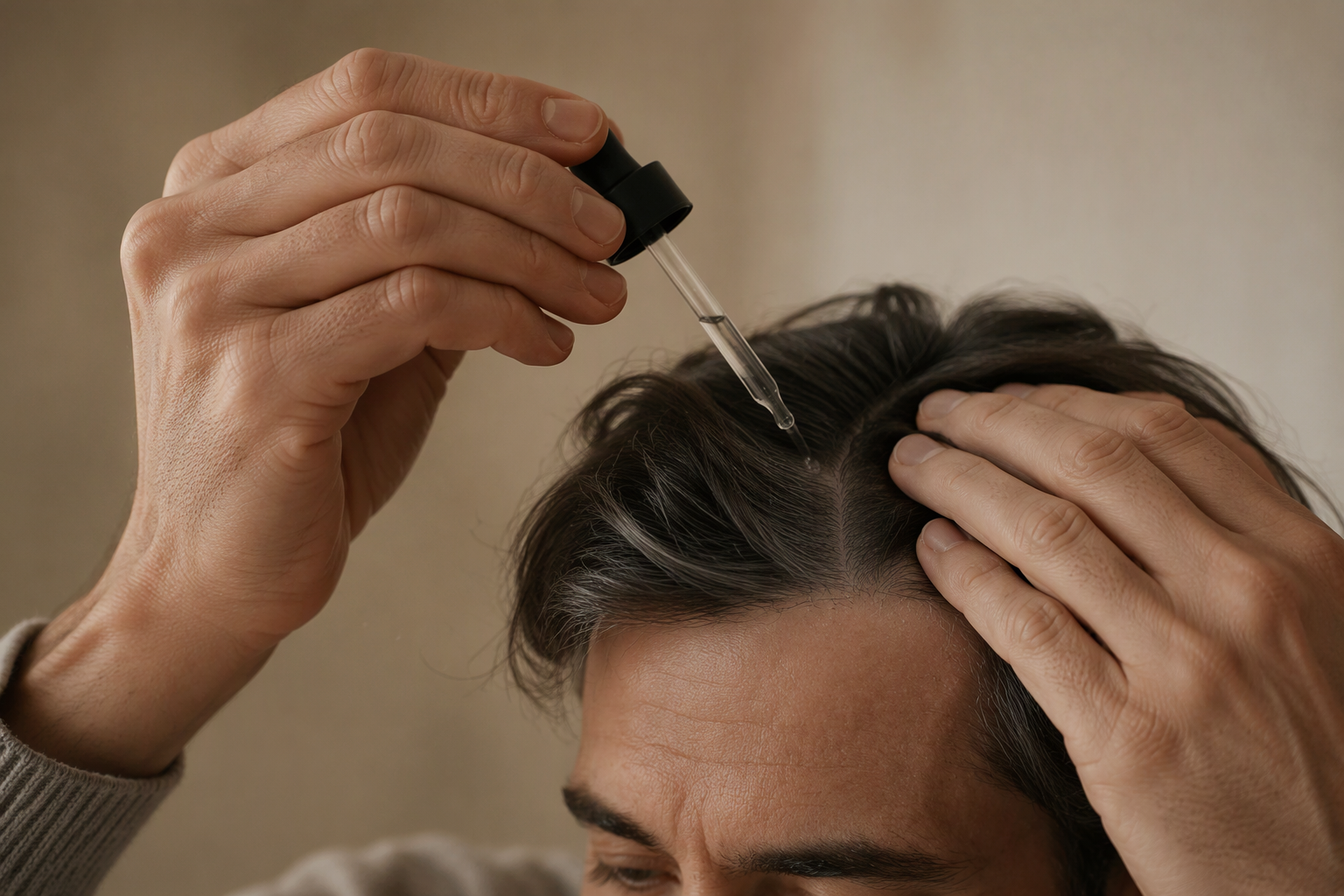
Minoxidil and finasteride serve different purposes. Minoxidil is used to support hair growth. Finasteride reduces the conversion of testosterone to dihydrotestosterone, or DHT, by inhibiting an enzyme involved in that process.
Their distinct actions explain why a clinician may discuss either drug alone or both together. Combination treatment is not automatically the best choice for every patient.
Single-ingredient plans are easier to understand and troubleshoot. If an adverse effect develops, there is only one active treatment to evaluate. These plans may also reduce cost and treatment burden, though the medication must still fit the diagnosis.
Combination plans may address complementary mechanisms, but they introduce more variables:
- Greater exposure to adverse effects
- More difficulty identifying which ingredient caused a problem
- A more complicated application or dosing routine
- Higher recurring costs
- Additional monitoring considerations
- Less flexibility when several actives share one compounded formula
Neither medication may be the right first step when hair loss could be linked to an underlying condition, active scalp disease, deficiency, or medication trigger. Some people also cannot use a particular treatment safely or prefer to avoid a specific route.
| Priority or concern | Questions to ask a clinician |
|---|---|
| Limiting systemic exposure | Is a topical option reasonable, and can systemic absorption still occur? |
| Keeping the routine simple | Which single treatment best addresses the primary goal? |
| Avoiding minoxidil | Does the diagnosis support another medical or procedural option? |
| Concern about sexual effects | What risks should be discussed for finasteride, and what follow-up is available? |
| Low blood pressure or dizziness | Is minoxidil appropriate, and what monitoring is needed? |
| Scalp sensitivity | Could another vehicle, formulation, or route be used? |
| Possible nutrient deficiency | Is testing appropriate before adding supplements? |
| Uncertain diagnosis | Is an examination, dermoscopy, laboratory work, or referral needed? |
| Pregnancy-related household concerns | What handling instructions apply to the exact product? |
| Limited budget | Which component addresses the main diagnosis, and which add-ons are optional? |
When Combination Treatment May Be Discussed
A clinician may consider combination treatment when the diagnosis is reasonably established, the patient is eligible for each ingredient, and the mechanisms fit the goal. Previous response, progression, tolerance, and likely adherence all matter.
The prescription should identify the route, dose or concentration, application amount, and follow-up plan. Combining drugs does not remove the contraindications or adverse effects associated with either one.
Fixed compounded formulas can be convenient, but they are harder to adjust. If one ingredient causes irritation or requires a dose change, the complete formula may need to be replaced.
Why More Treatment Does Not Always Mean More Growth
A routine works only if it can be followed. Multiple pills, scalp applications, supplements, drying times, and refill schedules may look comprehensive on a sales page but prove impractical.
Extra ingredients also increase expense and may add risk without addressing the cause. We prefer a plan that justifies every component over a long formula presented as automatically more effective.
Topical Minoxidil vs. Low-Dose Oral Minoxidil
Topical and oral minoxidil contain the same active ingredient but are not interchangeable versions of the same treatment. Their routes, practical burdens, safety considerations, and monitoring needs differ.
Topical minoxidil is applied to the scalp and has established use for certain forms of hair loss. It avoids taking a systemic tablet, but it requires consistent application and may cause residue, irritation, or styling inconvenience.
Low-dose oral minoxidil may appeal to people who find tablets easier than topical routines. In the United States, however, oral minoxidil for hair loss is an off-label use. It requires individualized prescribing rather than a casual conversion from a topical product.
A 2.5 mg tablet is an oral dosage form, not proof that 2.5 mg is suitable for a particular person’s hair loss. It should not be started, split, or adjusted without direction from a qualified prescriber.
Our guide to the minoxidil pill for hair loss covers effectiveness, dosing questions, adverse effects, and safety considerations in more detail.
| Factor | Topical minoxidil | Low-dose oral minoxidil |
|---|---|---|
| Route | Applied to the scalp | Swallowed as a tablet |
| U.S. hair-loss status | Certain topical products are approved for specified indications | Hair-loss use is off-label |
| Routine | Requires application, drying, and handwashing | Simpler administration for some patients |
| Practical drawback | Residue, irritation, transfer, or styling disruption | Systemic monitoring and tablet adherence |
| Unwanted hair growth | May occur outside the intended area after transfer or exposure | May occur on the face or body |
| Cardiovascular concern | Systemic exposure is generally lower but not necessarily absent | Blood-pressure effects, dizziness, fluid retention, and heart-rate changes require consideration |
| Key question | Can the scalp tolerate a sustained routine? | Does the medical history support off-label systemic treatment? |
Topical Minoxidil: Advantages and Tradeoffs
Direct scalp application may suit someone who wants to limit systemic exposure. Formulations vary, so instructions and approved uses depend on the exact product.
The main tradeoff is routine complexity. The product needs to be applied consistently and allowed to dry. Some vehicles can contribute to itching, dryness, flaking, or irritation.
Follow the product’s instructions for application, handwashing, drying, and preventing transfer to other skin areas, people, fabrics, or pets. Applying more than directed does not guarantee better results.
Early shedding can occur after minoxidil is started. A prescriber should explain what may be expected and when shedding warrants review. Benefits typically depend on continued use, and supported gains may diminish after treatment stops.
Low-Dose Oral Minoxidil: Monitoring and Adverse Effects
Potential adverse effects discussed with oral minoxidil include:
- Unwanted facial or body hair
- Fluid retention
- Ankle or lower-leg swelling
- Lightheadedness or dizziness
- Headache
- Faster heart rate or palpitations
- Blood-pressure changes
A history of low blood pressure, recurrent dizziness, swelling, cardiovascular disease, or relevant medication use may change the risk assessment. The prescriber should review prescription drugs, over-the-counter products, and supplements before treatment.
Follow the monitoring plan and report swelling, persistent dizziness, rapid heartbeat, or other concerning symptoms. Chest pain, fainting, or breathing difficulty requires urgent medical care.
Oral vs. Topical Finasteride: DHT Reduction, Risks, and Product Status
Finasteride does not eliminate all DHT. It inhibits type II 5-alpha-reductase, reducing the conversion of testosterone to DHT.
Oral finasteride creates systemic exposure through a tablet. Topical finasteride is applied to the scalp with the aim of local delivery, but topical use does not guarantee zero systemic absorption or zero risk.
The formulation matters. Concentration, application volume, frequency, vehicle, and treated scalp area can affect the delivered dose and systemic exposure. “Topical means side-effect-free” is not a reliable safety claim.
Potential concerns to discuss with a prescriber include:
- Sexual adverse effects
- Fertility or reproductive concerns
- Breast tenderness, enlargement, or lumps
- Mood changes
- Persistent or unexpected symptoms
- Effects on PSA interpretation when relevant
Anyone receiving PSA testing should tell the healthcare professional that they use finasteride.
Approval also varies by country and formulation. In the United States, compounded topical finasteride is not an FDA-approved finished drug, even though finasteride is an approved active ingredient in other finished products.
Finasteride and dutasteride are not interchangeable. Our comparison of dutasteride versus finasteride covers differences in enzyme inhibition, approval context, and clinical decision-making.
Questions to Ask Before Starting Finasteride
Ask the prescriber:
- Why does finasteride fit the suspected diagnosis?
- Why was oral or topical delivery selected?
- What dose, concentration, and application amount will be used?
- Is the topical product compounded?
- Which pharmacy will dispense it?
- What systemic absorption is possible?
- Which adverse effects require routine, prompt, or urgent care?
- Could treatment affect fertility plans or PSA interpretation?
- What follow-up is available if symptoms develop?
- Can the dose or route be changed instead of automatically renewed?
- What happens if treatment is ineffective or poorly tolerated?
The answers should address the exact prescription. Generic reassurance is not informed consent.
Handling and Household Precautions
Follow instructions from the prescriber and dispensing pharmacist. Whole tablets, crushed tablets, sprays, gels, and solutions may have different handling requirements.
Some finasteride products carry pregnancy-related warnings, especially when someone who is or may become pregnant could contact crushed or broken tablets or a topical formulation. Confirm the storage, spill, contact, and transfer precautions for the exact product rather than applying one internet rule to every form.
Genetic-Informed Hair Care: Useful Context, Not a Crystal Ball
Genetic testing can add context, but it cannot guarantee that a drug will work, identify a perfect dose, or promise freedom from adverse effects. Hair loss reflects a combination of biological, medical, behavioral, and environmental factors.
At Roots by Genetic Arts, we use genetic-informed personalization as one part of a broader assessment. Medical history, hair-loss pattern, photographs, scalp findings, contraindications, treatment preferences, and follow-up remain essential.
Genetic information may support a more informed conversation when interpreted cautiously. Providers should distinguish clinically supported findings from exploratory associations and explain how each result affects the recommendation.
A genuinely customized plan should document:
- The suspected diagnosis
- The findings supporting it
- Why each treatment was selected
- Why reasonable alternatives were not selected
- The proposed dose, route, and duration
- Known uncertainties
- Monitoring and follow-up requirements
- What would trigger a change
That is what we mean by “Stop guessing, start growing.” It is not a claim that genetics can predict the future. It is a commitment to clearer treatment reasoning.
The Personalization Ladder
We view online personalization as a ladder:
- Health questionnaire: Records symptoms, medical history, medications, and potential contraindications.
- Clinician review and photographs: Adds professional review of the pattern, timeline, goals, and visible findings.
- Targeted diagnostic testing: Uses laboratory work or another evaluation when the history suggests deficiency, endocrine disease, or systemic illness.
- Genetic-informed context integrated with clinical findings: Adds genetic information without overriding diagnosis or established safety principles.
A higher step is not automatically better if it produces data without changing the decision. Information has value when it leads to a transparent, medically reasonable recommendation or confirms that no change is needed.
Questions Genetic Testing Can and Cannot Answer
Depending on the test and evidence behind it, genetic results may provide context about inherited biology relevant to hair loss. They can also help patients and clinicians ask more focused questions.
Genetic testing cannot reliably promise:
- Certain treatment success
- A guaranteed best medication
- A perfectly precise dose
- No adverse effects
- A complete diagnosis without clinical assessment
- Protection from developing another type of hair loss
Results do not replace an examination, medication review, contraindication screening, clinically indicated laboratory work, or ongoing monitoring. Providers should explain which findings have clinical support, which remain exploratory, and what each result changes.
Supplements and Compounded Formulas: Look Beyond the Ingredient List
Supplements and compounded prescriptions often appear impressive because they contain many ingredients. Ingredient count is a poor substitute for diagnostic relevance, quality, and dose transparency.
Someone with a confirmed nutrient deficiency may benefit from targeted correction under clinical guidance. That is different from assuming everyone with androgenetic alopecia needs a broad proprietary blend.
Biotin is a useful example. More is not automatically better, and high intake can interfere with some laboratory tests. Patients should disclose supplement use before testing and follow instructions from their healthcare professional or laboratory.
Compounded prescriptions require separate scrutiny. Compounding may be appropriate when someone needs a dose, combination, dosage form, or ingredient profile that is not available in a suitable approved finished product.
Still, familiar ingredients do not make every compound equivalent. Concentration, vehicle, stability, delivered dose, storage, and pharmacy practices can vary. The American Hair Loss Association has raised concerns about transparency and consistency in telemedicine-linked compounded hair-loss products. We recommend evaluating the exact prescription rather than relying on familiar ingredient names.
When a Supplement May Address a Real Need
Supplementation makes the most sense when history, diet, examination, or appropriate testing identifies a plausible deficiency or increased need. The dose and duration should target that issue rather than follow marketing alone.
Ask:
- What deficiency or concern is this intended to address?
- Was the need established through history or testing?
- How much of each nutrient is included?
- Does it duplicate another supplement?
- Could it interact with medication or affect testing?
- When will the need be reassessed?
Unnecessary supplements add cost and may create avoidable risks. “Natural” does not mean necessary or harmless.
Questions to Ask About a Compounded Prescription
Request the following before paying:
- Every active ingredient
- The concentration of each active
- The exact dose or application amount
- Administration instructions
- The dispensing pharmacy’s name and location
- Storage requirements
- Stability information and beyond-use date
- Refill timing
- Shipping considerations
- A process for reporting adverse effects
- A procedure for changing one ingredient or dose
- The complete recurring cost
Ask why compounding is being used and whether an approved finished product could meet the same need. The provider should offer a patient-specific reason rather than presenting compounding as an automatic upgrade.
Treatment Timeline, Maintenance, and What Happens If You Stop
Hair treatment takes time because hair grows in cycles. Daily mirror checks create more noise than useful evidence.
The early period often focuses on learning the routine, monitoring adverse effects, and establishing consistent use. Minoxidil users may experience early shedding, but severe, prolonged, or unusual shedding deserves clinical review.
Over the following months, stabilization may be a more realistic first goal than dramatic regrowth. Visible improvement varies and is not guaranteed.
A formal reassessment should consider:
- Whether the diagnosis still fits
- Whether shedding has stabilized
- Whether comparable photographs show change
- Whether treatment is being used as directed
- Whether adverse effects are acceptable
- Whether the route and dose remain appropriate
- Whether a new condition or medication changes the risk profile
- Whether the routine and cost are sustainable
Benefits supported by minoxidil or finasteride generally require continued treatment. After treatment stops, gains may diminish as the underlying hair-loss process continues. Providers should explain maintenance expectations before enrollment.
A Practical Progress-Check Schedule
Start with baseline documentation:
- Front, temple, top, crown, and relevant side photographs
- Consistent lighting, framing, and camera distance
- Similar hair length and styling
- Current shedding pattern and scalp symptoms
- A medication and supplement list
- Recent illnesses, procedures, stressors, or weight changes
- Health measurements requested by the clinician
Repeat photographs at clinician-agreed checkpoints, keeping conditions as consistent as possible. Periodic photographs are more useful than frequent mirror checks, but interpretation must account for the slow hair cycle.
Track adherence alongside appearance. Treatment may appear ineffective if doses are frequently skipped, applications are inconsistent, or irritation causes unreported breaks.
When to Reassess the Plan
Contact the clinician about intolerable adverse effects, worsening loss, new scalp symptoms, poor adherence, health changes, medication changes, or insufficient progress after the agreed assessment period.
Reassessment may involve:
- Reconsidering the diagnosis
- Reviewing technique and adherence
- Changing the route or vehicle
- Adjusting a clinician-directed dose
- Removing an unnecessary ingredient
- Ordering appropriate tests
- Referring for in-person assessment
- Discontinuing treatment under guidance
Do not change prescription medication based only on online anecdotes. Ask the prescriber how to stop, switch, or adjust the exact product.
How to Choose an Online Hair Loss Provider
A trustworthy comparison goes beyond checkout price. Use this checklist before authorizing a recurring charge.
Online Hair Loss Provider Checklist
Diagnosis and clinical review
- The provider states what diagnosis it is treating.
- Alternative causes and recent triggers are considered.
- A licensed clinician reviews the case.
- The clinician’s credentials and jurisdiction are disclosed.
- There is a route to in-person referral.
- Testing is discussed when clinically appropriate.
Medication transparency
- Every active ingredient is named.
- Dose, concentration, route, and application amount are disclosed.
- Prescription and nonprescription products are separated.
- Off-label use and compounded status are identified.
- The provider explains why each component fits the goal.
- Reasonable alternatives are discussed.
Safety and support
- Contraindications and current medications are reviewed.
- Relevant cardiovascular, sexual, reproductive, and mood concerns are addressed.
- Product-specific handling precautions are supplied.
- There is a clear contact method for adverse effects.
- Follow-up remains available after purchase.
- Dose changes require clinical review.
Pharmacy and product quality
- The dispensing pharmacy is identified.
- Approved finished drugs and compounds are clearly distinguished.
- Storage and beyond-use information are available when relevant.
- Refill and shipping procedures are explained.
- The delivered label matches the treatment plan.
Cost and subscription terms
- The complete medication cost is disclosed.
- Consultation, testing, supplements, and shipping are included in the total.
- Introductory and ongoing prices are distinguished.
- Billing frequency and minimum commitments are stated.
- Cancellation instructions are accessible.
- Supplement bundles are optional.
- Refund restrictions are disclosed.
Privacy and records
- The privacy policy covers health, photographic, and genetic data.
- Consent for data sharing is clear.
- Patients can request appropriate access to records.
- Genetic information is not presented as deterministic.
Red flags include undisclosed formulas, missing doses, guaranteed results, hidden supplement bundles, unclear cancellation terms, “zero side effects” claims, and no access to clinical support after purchase.
Questions to Ask Before Paying
Ask these questions in writing:
- What diagnosis are you treating?
- What alternative causes did you consider?
- Who reviews the case, and what are that clinician’s credentials?
- Could an in-person examination, dermoscopy, or laboratory testing be appropriate?
- What are the exact medication, dose, concentration, route, and application amount?
- Is any use off-label?
- Is any product compounded?
- Which pharmacy fills the prescription?
- Why does each ingredient belong in the plan?
- How are adverse effects and treatment changes handled?
- What follow-up is included?
- What is the recurring cost after promotions?
- How can the plan be paused or canceled?
A credible provider should answer without hiding behind “proprietary formula” language.
Quick Answers to Common Treatment Questions
Oral minoxidil may cause unwanted hair growth, fluid retention, swelling, dizziness, headache, heart-rate changes, and blood-pressure effects. Its use for hair loss is off-label in the United States and should involve individualized screening.
Finasteride reduces DHT; it does not remove all DHT. Oral and topical routes may both involve systemic considerations, though exposure can differ by dose and formulation.
Treatment choice also depends on diagnosis, sex, pregnancy potential, medical history, current medications, and contraindications. A plan marketed primarily to men should not be assumed appropriate for women or anyone who could become pregnant.
Medical disclaimer: This guide is educational and does not replace individualized diagnosis or treatment from a licensed healthcare professional. Severe symptoms such as chest pain, fainting, or breathing difficulty require urgent medical care.
FAQ
What Are the Side Effects of Oral Minoxidil?
Oral minoxidil may cause unwanted facial or body hair, fluid retention, ankle swelling, dizziness, headache, heart-rate changes, and blood-pressure effects. Its hair-loss use is off-label in the United States. Report swelling, palpitations, or persistent dizziness promptly. Seek urgent care for chest pain, fainting, or breathing difficulty.
Does Finasteride Remove DHT?
No. Finasteride lowers DHT by inhibiting type II 5-alpha-reductase, an enzyme involved in converting testosterone to DHT. It does not eliminate all DHT. Discuss sexual, reproductive, breast, mood, and PSA-related considerations with a qualified prescriber.
What Is a Minoxidil 2.5 mg Tablet Used For?
A 2.5 mg minoxidil tablet is an oral dosage form originally used in blood-pressure treatment. Clinicians may prescribe low-dose oral minoxidil off-label for hair loss after an individualized assessment. The tablet strength alone does not establish an appropriate dose, so it should not be started or adjusted without prescriber guidance.
Is Topical Finasteride Free From Systemic Side Effects?
No topical formulation should be assumed to have zero systemic absorption or risk. Exposure may vary with concentration, vehicle, dose, application amount, and frequency. Ask about the exact formula, possible adverse effects, PSA considerations, handling precautions, and follow-up.
Are Hair Supplements Necessary With Minoxidil or Finasteride?
Not automatically. Targeted supplementation may be appropriate when the history or testing identifies a nutritional deficiency. A proprietary blend is not required for every hair-loss plan, and unnecessary supplements can add cost, duplicate nutrients, cause adverse effects, or interfere with laboratory tests.
How Long Does Online Hair Loss Treatment Take to Work?
Assessment usually occurs over several months because hair cycles change slowly. Stabilization may come before visible improvement, and early shedding can occur with minoxidil. Use standardized photographs and clinician-agreed checkpoints instead of daily mirror checks. Results vary, and medication-supported gains may diminish after treatment stops.
Stop Guessing, Start Growing
Choose a plan that explains the diagnosis, justifies each ingredient, discloses the full recurring cost, and shows how new information could change treatment. Explore Roots by Genetic Arts to learn how we integrate genetic-informed context with clinical history, safety screening, and ongoing treatment decisions.
Roots by Genetic Arts
30 Oct 2026
Related Posts
-

The True-Personalization Audit for Hair Loss Treatment: Beyond Minoxidil, Finasteride, Supplements, and “Customized” Plans
See how leading online hair loss plans compare on diagnosis, ingredients, dosing, safety, and follow-up so you can spot real personalization. Read the audit.
Read more -

Compare Leading Online Hair Loss Treatment Plans That May Include Minoxidil, Finasteride, Supplements, or Customized Formulas
Compare minoxidil, finasteride, supplements, custom formulas, screening, costs, and cancellation terms to find a sustainable plan. Review your options.
Read more -

The True-Personalization Audit: Compare Leading Online Hair Loss Treatment Plans That May Include Minoxidil, Finasteride, Supplements, or Customized Care
See how online hair loss plans compare on minoxidil, finasteride, supplements, safety screening, and truly customized care before you subscribe.
Read more
Thanks for your order!
Login into your profile to set up your account.