
1 Nov 2026
Minoxidil and Finasteride: Which Hair Loss Treatment Fits Your Goals?
Compare how minoxidil and finasteride work, their risks, and when combining them may help you build an evidence-based hair loss plan. Explore your options.
Share


TL;DR
Minoxidil and finasteride address different parts of male pattern hair loss. Finasteride reduces the DHT signal linked to follicle miniaturization, while minoxidil supports follicle activity and growth. Some men may benefit from using both under clinical guidance. We recommend choosing a plan based on diagnosis, health risks, formulation, and long-term consistency rather than assuming the most aggressive regimen is best.
Table of Contents
- TL;DR
- Table of Contents
- Minoxidil and Finasteride: What Each Treatment Does
- Finasteride vs. Minoxidil: Which One Fits the Goal?
- Can Minoxidil and Finasteride Be Used Together?
- Oral, Topical, Foam, or Liquid: Comparing Formulations
- Side Effects: What to Watch For
- Shedding or Progression? How to Interpret Changes
- Results Over Time: A Realistic Timeline
- Diagnosis and Personalization: Look Beyond the Label
- FAQ
- Build a Hair Loss Plan Around Your Biology
Minoxidil and Finasteride: What Each Treatment Does
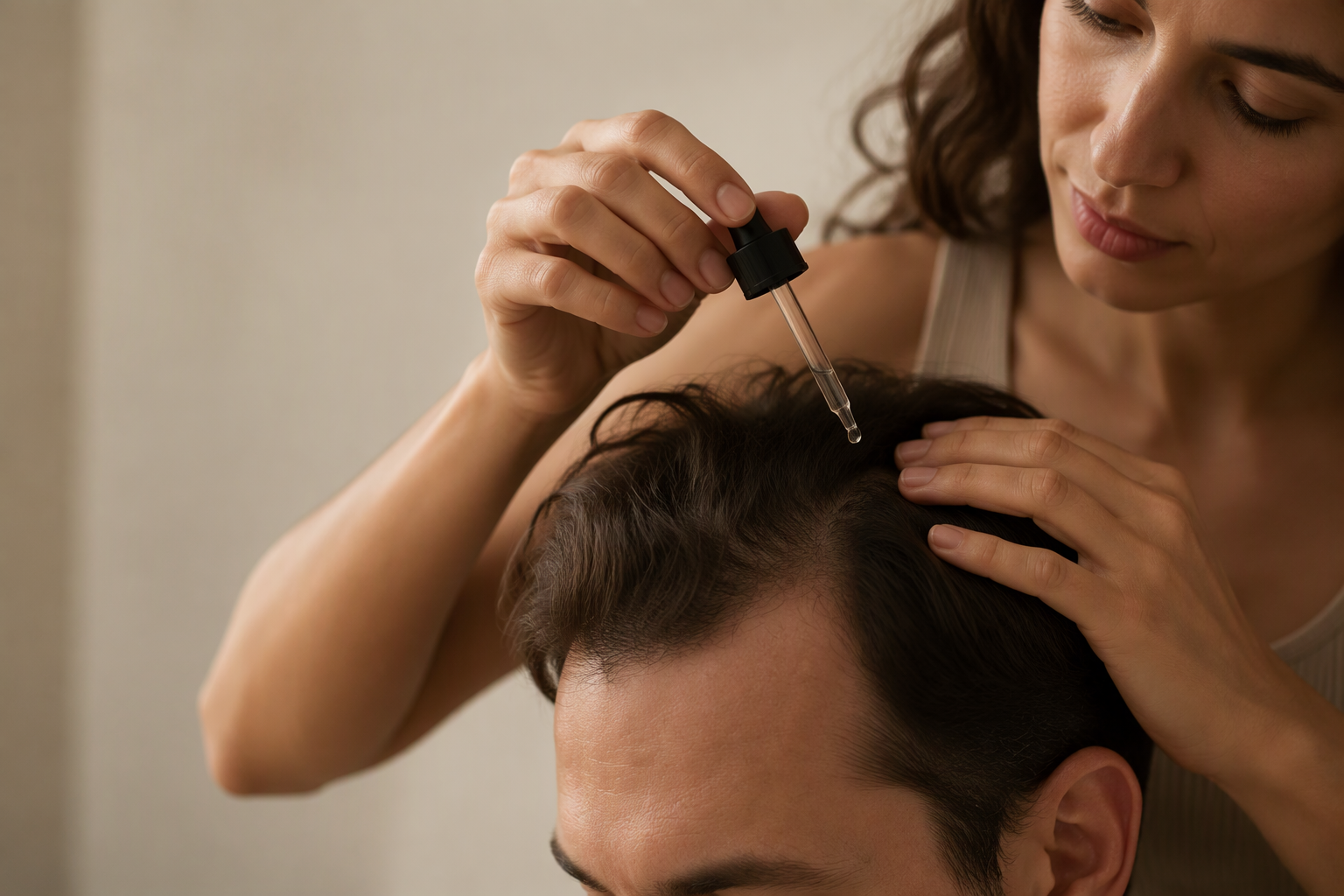
Finasteride reduces the conversion of testosterone into dihydrotestosterone, or DHT. Minoxidil supports follicle activity and the hair-growth cycle.
Because they act differently, the medications are not direct substitutes in every case. Neither permanently cures androgenetic alopecia, and maintaining benefits generally requires continued treatment.
| Factor | Finasteride | Minoxidil |
|---|---|---|
| Mechanism | Reduces DHT production | Supports follicle activity and growth |
| Common routes | Oral or topical | Topical liquid, foam, or oral |
| Primary goal | Slow DHT-driven progression | Support growth and visible density |
| Key considerations | Sexual, reproductive, breast, and mood concerns | Scalp irritation, unwanted hair, and cardiovascular effects |
Finasteride Targets the DHT Signal
In genetically susceptible follicles, DHT contributes to progressive miniaturization. Hair becomes finer and shorter, eventually producing less visible coverage.
Finasteride inhibits an enzyme involved in converting testosterone to DHT. Its main role is to slow or stabilize male pattern hair loss, although some men may also see greater density.
Minoxidil Supports Follicle Activity
Minoxidil can help viable follicles produce stronger or more visible growth, but it does not address the hormonal driver of androgenetic alopecia.
Responses vary. Some people see noticeable improvement, others mainly maintain existing density, and some respond poorly despite consistent use.
Finasteride vs. Minoxidil: Which One Fits the Goal?
There is no universal winner. We assess the diagnosis, treatment goal, hair-loss stage, medical history, other medications, risk tolerance, and likelihood of following the regimen.
Finasteride may take priority when slowing DHT-driven progression is the main concern. Minoxidil may be considered when growth support is the priority or finasteride is unsuitable or declined.
When Finasteride May Be Considered
A clinician may discuss finasteride for gradual, patterned thinning when stabilization is the main goal. Medical history, symptoms, fertility plans, medication use, and comfort with potential adverse effects can all affect suitability.
When Minoxidil May Be a Practical Starting Point
Topical minoxidil is widely available and may be a practical way to support density. It can also be considered when someone cannot or does not want to use finasteride.
Application burden matters. Texture, scalp irritation, cost, and an inconvenient routine can lead to repeated interruptions.
Why Stronger Is Not Always Better
More medication does not guarantee a better real-world result. A manageable regimen used consistently may be more useful than an aggressive combination that is quickly abandoned. We recommend optimizing for safety and fit, not theoretical strength.
Can Minoxidil and Finasteride Be Used Together?
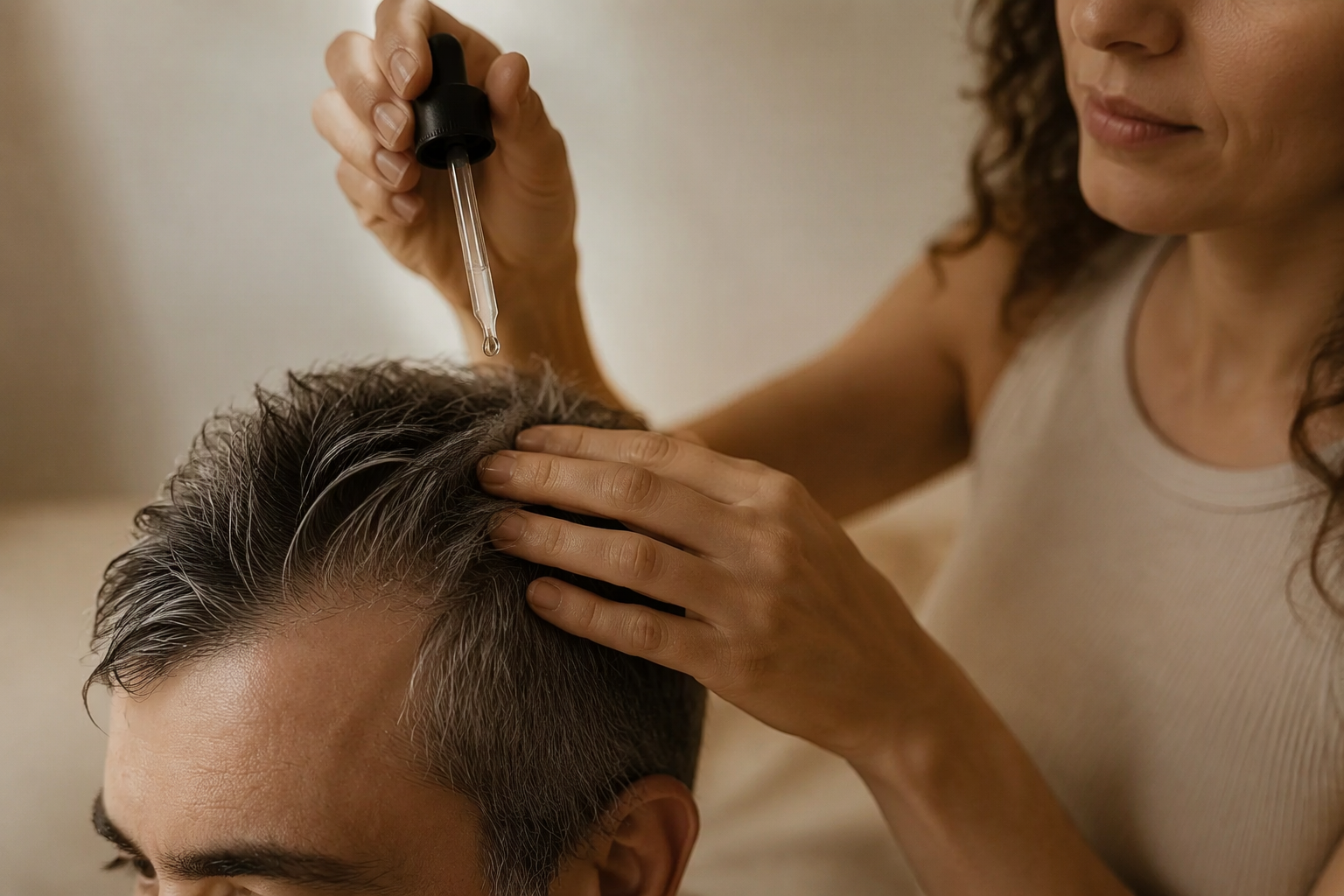
Yes, clinicians may prescribe minoxidil and finasteride together for appropriate patients. Finasteride targets DHT-related miniaturization, while minoxidil supports follicle growth.
Combination treatment may provide broader support, but it does not guarantee better results for every person. Starting both at once can also make benefits, shedding, or adverse effects harder to attribute.
Potential Advantages of Combination Therapy
A combined plan may address both stabilization and visible density. The outcome still depends on diagnosis, follicle viability, disease stage, individual biology, and consistent use.
Why a Staged Start Can Help
Introducing one treatment before the other may make it easier to assess tolerance. If irritation, dizziness, sexual symptoms, shedding, or another change develops, the likely cause can be easier to investigate.
The order and timing should reflect clinical priorities rather than a fixed rule.
Combined Topicals: Simpler Routine, Harder Troubleshooting
A combined topical formula can reduce daily steps. However, fixed combinations provide less dosing flexibility. If irritation or systemic symptoms occur, it may be difficult to identify whether an active medication or inactive ingredient is responsible.
Oral, Topical, Foam, or Liquid: Comparing Formulations
Formulation affects exposure, irritation, convenience, monitoring, and adherence. Topical treatment is not risk-free, and oral treatment is not automatically more effective.
| Formulation | Potential advantage | Main considerations |
|---|---|---|
| Oral finasteride | Simple routine | Systemic exposure and potential adverse effects |
| Topical finasteride | May limit systemic exposure | Absorption can still occur; formulas vary |
| Minoxidil liquid | Easy to apply directly to the scalp | Residue or irritation |
| Minoxidil foam | May dry faster | Cost, preference, and application consistency |
| Oral minoxidil | Avoids scalp application | Off-label for hair loss in many markets; requires oversight |
Topical Versus Oral Finasteride
Topical finasteride may reduce systemic exposure compared with oral use, but it does not eliminate absorption. Sexual, reproductive, breast, and mood-related concerns still require an informed discussion.
Topical Versus Oral Minoxidil
Topical minoxidil may cause irritation or be inconvenient to apply. Oral minoxidil avoids scalp application, but its use for hair loss is off-label in many markets and requires clinical supervision.
A clinician may review cardiovascular history, blood pressure, swelling risk, and medication interactions. Our minoxidil pill treatment guide covers effectiveness, safety, and monitoring in more detail.
Minoxidil Foam Versus Liquid
Liquid formulas may leave residue or contain inactive ingredients that irritate some scalps. Foam may dry faster and feel easier to use. Hair length, scalp sensitivity, cost, and personal preference all influence consistency.
Side Effects: What to Watch For
Not every new symptom is caused by treatment, but concerns should not be dismissed. We recommend pre-treatment risk screening and clinician review for persistent or worrying changes.
Finasteride Concerns
Reported concerns include:
- Reduced libido
- Erectile or ejaculatory symptoms
- Fertility concerns
- Breast tenderness, enlargement, or lumps
- Depression, anxiety, or mood changes
Risk estimates differ across studies and formulations. New breast changes or significant mood symptoms warrant prompt medical review.
Minoxidil Concerns
Topical minoxidil may cause itching, flaking, redness, residue, or unwanted facial hair. Systemic effects can include dizziness, swelling, a rapid heartbeat, or blood-pressure changes.
Chest pain, fainting, difficulty breathing, marked swelling, or a rapid heartbeat requires prompt medical attention. Oral minoxidil warrants particular caution because it was originally developed as a blood-pressure medication.
Combined Topical Side Effects
Combined topicals can cause reactions to active or inactive ingredients. Systemic absorption may also occur. A clinician can assess the dose, application area, scalp condition, interactions, and whether another formulation is more suitable.
Shedding or Progression? How to Interpret Changes
Temporary shedding can occur after minoxidil is started as follicles move through the growth cycle. However, shedding does not prove that treatment is working.
Severe, prolonged, patchy, painful, or inflamed hair loss requires reassessment. The same applies when shedding follows illness, major stress, weight change, or a medication change.
When Shedding May Be an Adjustment
Treatment-related shedding is more likely to be diffuse and unaccompanied by alarming scalp or systemic symptoms. There is no single timeline that applies to everyone.
We suggest using standardized photographs and discussing changes with the treating clinician rather than relying on daily mirror checks.
When the Diagnosis Needs Another Look
Reassessment is appropriate when shedding is:
- Patchy or rapidly progressive
- Accompanied by redness, pain, scaling, or scarring
- Persistent or worsening
- Associated with illness or medication changes
- Potentially related to thyroid, nutritional, or inflammatory conditions
Adding more medication without checking the diagnosis can delay appropriate care.
Results Over Time: A Realistic Timeline
Results usually involve stabilization and gradual density changes rather than immediate regrowth. Baseline severity, follicle viability, consistency, and individual biology all affect the outcome.
Early follow-up should focus on tolerance, adherence, shedding, and adverse effects. Later reviews can assess stabilization, cosmetic change, and whether the regimen remains practical.
How to Track Progress Reliably
Use photographs with consistent:
- Lighting and camera distance
- Angle and head position
- Hair length and styling
- Wet or dry conditions
- Time intervals
Scheduled images and clinical assessments are more reliable than memory. Continued deterioration, new symptoms, or poor tolerability should prompt a review.
Diagnosis and Personalization: Look Beyond the Label
Minoxidil and finasteride are commonly used for androgenetic alopecia, but not every receding hairline or period of shedding has the same cause. History, pattern, scalp health, family background, medications, and selective testing may all matter.
How Clinicians Assess Hair Loss
Male pattern hair loss generally causes gradual patterned thinning and follicle miniaturization. Sudden or diffuse loss may require evaluation for illness, stress, nutritional issues, thyroid dysfunction, medication effects, or inflammatory scalp disease.
What Genetics Can and Cannot Show
Multiple genes and non-genetic factors influence androgenetic alopecia and treatment response. Genetic information can add context, but it cannot guarantee that either medication will work.
Our guide to what a genetic test for hair loss can and cannot reveal explains how DNA data can support, but not replace, clinical care.
At rootsbyga.com, we combine relevant biological information with clinical evaluation and measurable follow-up. Genetics can sharpen the picture; real-world monitoring shows whether the plan is working.
FAQ
How Does Finasteride Work for Hair Loss?
Finasteride inhibits an enzyme involved in converting testosterone to DHT. This reduces a key driver of follicle miniaturization in genetically susceptible men.
Is Oral Minoxidil Used for Hair Loss?
Clinicians may prescribe oral minoxidil for some patients, but hair-loss use remains off-label in many markets. Cardiovascular screening and monitoring are necessary.
Is There a New Hair Loss Pill Available?
Investigational treatments, including extended-release oral minoxidil formulations, continue to be studied. Positive trial results do not mean a product is approved, commercially available, or suitable for routine prescribing.
What Happens If Treatment Stops?
The underlying hair-loss process may resume. Hair maintained or gained during treatment can gradually be lost. We recommend discussing discontinuation with the prescribing clinician.
Do Minoxidil and Finasteride Work for Everyone?
No. Results depend on the diagnosis, hair-loss stage, follicle viability, consistency, tolerability, and individual biology.
Build a Hair Loss Plan Around Your Biology
Explore personalized genetic hair loss treatment from rootsbyga.com to combine biological insight with clinical risk review, a sustainable treatment plan, and measurable follow-up.
Roots by Genetic Arts
1 Nov 2026
Thanks for your order!
Login into your profile to set up your account.