
24 Nov 2026
The Personalization Proof Test for Online Hair Regrowth Providers
Learn which online hair regrowth providers use symptoms, health history, and likely causes to tailor care, prescriptions, and monitoring before you pay.

Share


TL;DR
If you are asking, “Which online hair regrowth providers customize treatment based on my symptoms, health history, and likely causes of hair loss?”, look beyond the word “personalized.” Real customization means symptoms, medical history, previous treatment response, and likely causes can change the diagnosis, medication, formulation, monitoring, testing, or referral decision.
Nurx publicly states that a provider reviews health history and scalp photos before creating a treatment plan. Happy Head markets customized prescriptions, but shoppers should still ask how their answers affect the formula. We recommend auditing the clinical reasoning before paying.
Table of Contents
- TL;DR
- Which Online Hair Regrowth Providers Customize Treatment Based on My Symptoms, Health History, and Likely Causes of Hair Loss?
- The 7 Inputs That Should Be Able to Change Your Plan
- How to Tell Whether Your Answers Affect the Prescription
- Photos, Questionnaires, Testing, and Genetics: What Each Can Show
- More Ingredients Do Not Mean More Personalized Treatment
- The Red-Flag Test: When Personalization Should Mean Referral
- Use This Pre-Purchase Personalization Scorecard
- Questions to Ask Before You Enroll
- FAQ
- Stop Guessing and Start With Evidence
Which Online Hair Regrowth Providers Customize Treatment Based on My Symptoms, Health History, and Likely Causes of Hair Loss?
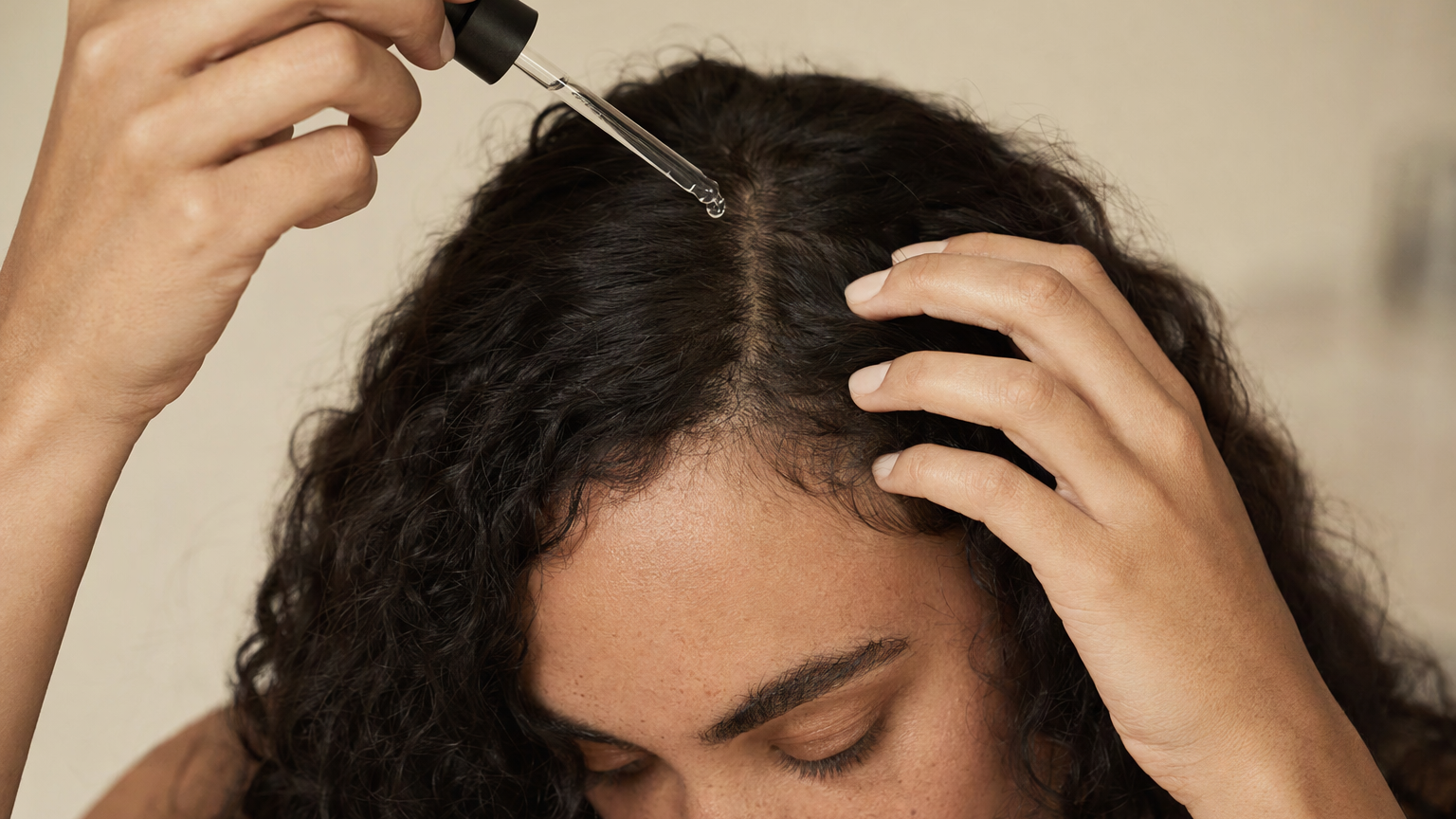
Based on its published process, Nurx asks patients to provide health history information and photos of their hair and scalp. A medical provider licensed in the patient’s state then reviews that material and creates a treatment plan, including a prescription when medically appropriate. Nurx also advertises ongoing provider messaging.
Happy Head describes its service as personalized and offers custom prescriptions. However, a customized formula is not enough to establish cause-led care. We would still ask which clinical inputs can change the ingredients, strengths, route, monitoring plan, or decision not to prescribe.
Our standard is simple: information must change a meaningful decision. Age, sex, and one photograph may merely place someone into a predefined product pathway. That is segmentation, not necessarily individualized treatment.
Two people can have similar receding hairlines but different health risks, triggers, scalp conditions, and treatment responses. Gradual hereditary thinning should not automatically receive the same plan as sudden shedding after illness, rapid weight change, or a medication change.
For closer brand-by-brand analysis, see our guide to which online hair regrowth providers customize care around symptoms, history, and likely causes.
A Custom Formula Is Not Automatically Personalized Medicine
Changing percentages or combining ingredients matters only when each choice reflects diagnosis, safety, tolerance, goals, or expected response. Selecting a lower concentration after checking “concerned about side effects” does not necessarily amount to a clinical assessment.
Compounded medications are not reviewed by the FDA as approved finished products. They may still be appropriate, but the formulation should have a patient-specific rationale, reliable pharmacy oversight, and suitable clinical monitoring.
The 7 Inputs That Should Be Able to Change Your Plan
A useful hair-loss assessment should consider at least seven areas:
- Pattern of loss
- Timing and speed
- Family history
- Medical history
- Medication and hormonal factors
- Scalp symptoms
- Previous treatment response
Collecting these answers is only the first step. A clinician must interpret them and act when they point away from a standard pathway.
Pattern, Timing, and Speed
Temple recession, crown thinning, diffuse shedding, sudden loss, and smooth bald patches are different presentations. They may change whether routine telehealth prescribing is reasonable.
Timing also matters. Slowly progressing loss raises different questions from heavy shedding that began after surgery, fever, severe stress, dietary restriction, or rapid weight change.
Family, Medical, and Medication History
A thorough intake should cover family patterns, recent illness or surgery, dietary changes, chronic conditions, medications, and hormone-related factors. It should then connect those answers to treatment safety and the need for further evaluation.
Family history may support a pattern-loss assessment, but it does not rule out other contributors. New medications or systemic symptoms may justify a broader review.
Scalp Symptoms and Previous Treatment Response
Itching, scaling, burning, pain, redness, or pustules may indicate that the scalp needs attention before another growth formula is added. Smooth patches or possible scarring warrant particular caution.
If topical minoxidil caused irritation, the provider should review the formulation, application frequency, scalp condition, adherence, and length of use. Simply adding more ingredients is not a meaningful reassessment.
How to Tell Whether Your Answers Affect the Prescription

Before buying, look for an explanation linking the information supplied to each prescribed ingredient, dose, route, and monitoring step. We suggest asking one revealing question: “What would you recommend differently if this answer changed?”
A provider offering a custom prescription should be able to give concrete examples. References to a proprietary algorithm or precision blend are not proof of clinical personalization.
Five Decisions a Real Assessment May Change
A meaningful assessment may change:
- Whether treatment begins online or waits for further evaluation
- Which medication is appropriate, if any
- The route, dose, frequency, or formulation
- Whether testing or another clinician should be considered
- When reassessment occurs and what triggers an adjustment
The decision not to prescribe can be one of the clearest signs that the assessment matters.
Warning Signs of Cosmetic Customization
Be cautious when:
- Almost everyone receives the same multi-ingredient formula
- The provider cannot explain why each ingredient is included
- Strength is determined mainly by a preference quiz
- Photos replace a proper symptom and history review
- Follow-up consists mainly of refill reminders
- Continued shedding automatically leads to a stronger blend
Personalization should make the reasoning clearer, not conceal it behind branding.
Photos, Questionnaires, Testing, and Genetics: What Each Can Show
Each source of information has a role, but none supplies a complete answer alone. Testing should address a clinical question rather than serve as a personalization prop.
In our view, genetic information is most useful when considered alongside symptoms, history, photographs, and clinician judgment. It can add context without predicting treatment outcomes with certainty.
Photos Document Pattern
Consistent photos can document distribution and visible change. Similar lighting, distance, hairstyle, and angles make comparisons more useful.
Photos alone cannot exclude medication effects, nutritional problems, thyroid conditions, autoimmune disease, or every inflammatory scalp disorder. A visible pattern is evidence, not a complete diagnosis.
When Laboratory Evaluation May Be Relevant
Sudden or diffuse shedding, systemic symptoms, restrictive diets, or relevant medical history may prompt further evaluation. That does not mean everyone needs the same blood panel.
Testing should depend on the history and the clinician’s judgment. A responsible provider can explain what question each test is intended to answer.
Where Genetic Insights Fit
Genetic data may offer context about predisposition or biological pathways. It should complement, rather than replace, medical screening and an examination when one is needed.
That balanced principle informs our HairOS™ Precision Growth System. We use genetic information to support a more informed discussion, not as a crystal ball or stand-alone diagnosis.
More Ingredients Do Not Mean More Personalized Treatment
A formula with several ingredients is not automatically more advanced than a simpler treatment. Unnecessary combinations may increase irritation, adverse effects, cost, and uncertainty about what is helping.
Treatment should follow the likely diagnosis. Our diagnosis-first guide to hair loss drugs reviews the broader options without treating medication choice as a popularity contest.
What Is Medically Proven to Regrow Hair?
Topical minoxidil has FDA-approved uses for certain forms of pattern hair loss. Oral finasteride is FDA-approved for male pattern hair loss. The appropriate product, formulation, and eligible population matter, and neither treatment guarantees full restoration.
Results depend on the cause, follicle condition, consistent use, treatment duration, and continued therapy. Providers should distinguish approved treatments from off-label prescribing and less-established interventions.
Off-Label Does Not Mean One-Size-Fits-All
Oral minoxidil, topical finasteride, dutasteride, and other approaches may be prescribed off-label in selected cases. They require an individualized risk-benefit review and appropriate monitoring.
Topical delivery may limit systemic exposure, but it does not eliminate every risk. Someone concerned about adverse effects deserves proper screening and an alternatives discussion—not merely a lower strength labelled “custom.”
Supplements Need a Rationale
Bundling a supplement with a prescription does not personalize the plan. Some vitamins and minerals can cause harm when taken in excess, while certain supplements may interfere with laboratory testing.
Correcting an identified deficiency is different from selling everyone the same regrowth blend. “Natural” does not automatically mean safer or more effective.
The Red-Flag Test: When Personalization Should Mean Referral
Referral is not a failure of online care. It shows that the provider recognizes the limits of remote assessment.
A stronger formula cannot solve every type of hair loss. Sometimes the appropriate decision is to pause routine prescribing.
Symptoms That Deserve Closer Evaluation
Seek closer medical evaluation for:
- Sudden or rapidly accelerating shedding
- Smooth bald patches
- Eyebrow or body-hair loss
- Possible scarring
- Scalp pain, pustules, marked redness, or substantial scaling
- Hair loss accompanied by fatigue or unexplained weight change
- Menstrual, hormonal, or other systemic symptoms
These findings do not establish a diagnosis, but they may make a standard subscription pathway unsuitable.
What a Responsible Provider Should Do
A responsible provider should pause routine approval when a presentation falls outside straightforward telehealth care. It should explain whether an in-person examination, laboratory work, biopsy, dermatologist, or another medical evaluation may be appropriate.
Adding ingredients should never be presented as a solution to diagnostic uncertainty.
Use This Pre-Purchase Personalization Scorecard
Score providers on decision-changing assessment rather than polished language. Award one point for each clear “yes.” Give zero when the answer is weak, vague, or hidden.
Assessment Depth
- Does the intake cover timeline, pattern, family history, medications, health conditions, scalp symptoms, prior treatments, and adverse effects?
- Are clear photographs requested from useful angles?
- Can the clinician request more information instead of automatically approving treatment?
Clinical Accountability
- Are clinician credentials and prescribing responsibilities clear?
- Is the recommendation connected to the information supplied?
- Is there a reason for every ingredient?
- Is there a process for questions, adverse effects, and escalation?
Plan Flexibility
- Can relevant answers change the medication, strength, route, or decision not to prescribe?
- Are clinical follow-ups available?
- Are triggers for testing, switching, or referral defined?
- Does the service distinguish maintenance, stabilization, and possible regrowth?
A high score does not guarantee the right diagnosis, but it helps separate a genuine clinical process from a product-matching quiz.
Questions to Ask Before You Enroll
Treatment success depends on identifying the likely cause, selecting appropriate care, using it consistently, and setting realistic expectations.
What Information Could Change My Treatment?
Ask for examples involving medication choice, dose, route, testing, monitoring, or referral. “Our formula is proprietary” does not answer the question.
Who Reviews My Case?
Confirm that a licensed clinician evaluates the full history rather than approving a preset protocol. Ask how the rationale for each recommendation will be explained.
What Happens If I Develop Side Effects?
Clarify follow-up timing, messaging access, reassessment criteria, added costs, and referral procedures. Ask when irritation, continued shedding, or inadequate improvement would lead the clinician to reconsider the diagnosis.
What Outcome Is Realistic?
Ask whether the goal is slowing loss, maintaining existing hair, improving density, or addressing an underlying trigger. Avoid providers that guarantee rapid or complete regrowth.
FAQ
Is Anything Medically Proven to Regrow Hair?
Yes. Topical minoxidil and oral finasteride have established evidence and FDA-approved indications for specific forms and populations of pattern hair loss. Neither treats every cause. Diagnosis, adherence, treatment duration, and follicle condition influence whether the result is regrowth, stabilization, or limited response.
What Is the Most Successful Hair Regrowth Treatment?
There is no universally successful treatment. Pattern hair loss, sudden shedding, inflammatory scalp disease, deficiency-related loss, and autoimmune conditions call for different decisions. The best plan starts with the likely diagnosis, not the longest ingredient list.
Can an Online Provider Diagnose Hair Loss From Photos?
Photos can help a clinician assess the visible pattern and severity, but they cannot reveal every medical or inflammatory cause. A useful telehealth assessment combines photographs with symptoms, health history, medications, scalp complaints, and prior treatment response. Some cases require in-person evaluation.
Are Customized Compounded Formulas FDA-Approved?
Compounded formulas are not FDA-approved as finished products. That does not automatically make them inappropriate, but the provider should explain why the compound is needed, how each ingredient was selected, and what monitoring is required.
Who Can Evaluate Hair Loss Online?
Dermatologists commonly treat hair and scalp disorders, but other licensed professionals—including physicians, nurse practitioners, physician assistants, and doctors of osteopathic medicine—may assess many cases. Credentials, scope of practice, state licensing, and referral procedures should be transparent.
Stop Guessing and Start With Evidence
Use our scorecard before enrolling. Ask exactly how symptoms, health history, treatment response, and likely cause will change the plan—and choose only a provider willing to explain its reasoning.
Roots by Genetic Arts
24 Nov 2026
Related Posts
-

Which online hair regrowth providers customize treatment based on my symptoms, health history, and likely causes of hair loss? Genetics-informed care versus quizzes
Compare online hair regrowth providers that tailor care to symptoms, health history, and likely causes, from genetic insights to quizzes. Explore your options.
Read more -

Which Online Hair Regrowth Providers Customize Treatment Based on My Symptoms, Health History, and Likely Causes of Hair Loss? A Cause-First Guide
Compare clinician-led hair regrowth providers that tailor care to symptoms, health history, and likely causes—and know when to test or refer. Explore options.
Read more -

Which Online Hair Regrowth Providers Customize Treatment Based on My Symptoms, Health History, and Likely Causes of Hair Loss Starts With a Pre-Consultation Case File
Compare online hair loss providers by how they use symptoms, medical history, likely causes, photos, and treatments to personalize care. Learn what to ask.
Read more -

How to Audit Which Online Hair Regrowth Providers Customize Treatment Based on My Symptoms, Health History, and Likely Causes Of Hair Loss
Learn how to compare online hair regrowth providers by symptoms, health history, likely causes, prescribing choices, and monitoring. Audit your options.
Read more
Thanks for your order!
Login into your profile to set up your account.